Window Well Covers Terms Explained: A Plain-English Glossary
If you are pricing a basement window project in Minneapolis, the quotes and product pages throw a lot of jargon at you fast. This window well covers glossary breaks those terms into plain English so you can read a quote line by line, ask a local installer sharp questions, and spot a thin answer when you hear one. Each entry starts with a short definition you can use on its own. Nothing here requires a construction background.
- Window Well and Cover Basics
- Egress Window
- Galvanized Well
- Grate
- Polycarbonate
- Egress Requirement
- Code Compliance
- Clear Opening
- Releasable Cover
- Egress Ladder
- Grading
- Drainage Gravel
- Frost Depth
- Backfill
- Free Quote
- Cut and Frame
- Glass Block
The Well and Its Cover
Window Well and Cover Basics
A window well is the dug-out, walled pocket in the ground outside a basement window that sits below grade. It holds the soil back, lets light reach the window, and gives a person room to climb out in an emergency. If your basement window sits below ground level, you need a well, and the well needs to drain. When an installer talks about window well installation, they mean digging this pocket, setting the wall material, and grading the soil so water runs away from the house.
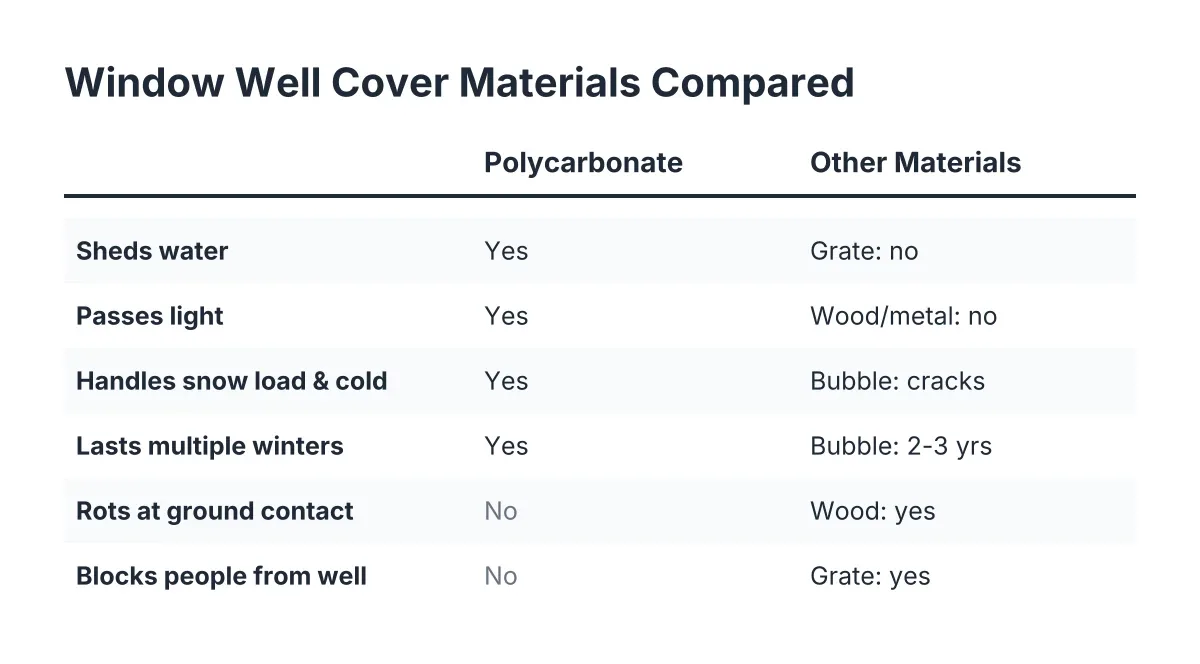
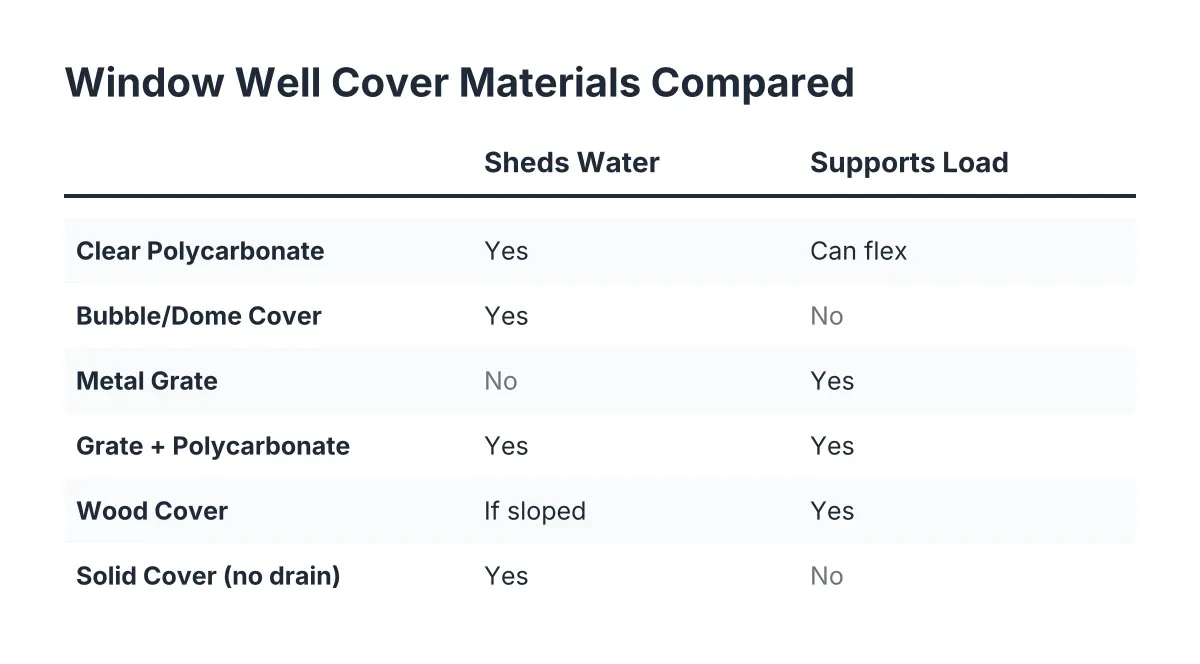
A window well cover is a lid, usually clear plastic or metal grate, that sits over the top of a window well to keep out rain, snow, leaves, and animals. In Minnesota, a cover matters most in winter, when a well can fill with snow and block your emergency exit. Window well covers come in flat, domed, and sloped shapes, and the right one depends on the size and shape of your well. A quote that includes a cover should say what it is made of and how it attaches.
Egress Window
An egress window is a basement window large enough for a person to climb out of and for a firefighter in gear to climb in through. Code sets minimum opening sizes, so a small hopper window near the ceiling usually does not qualify. If you are finishing a basement or adding a bedroom, the bedroom egress requirement is what forces the window upgrade. This is the core of basement egress window installation: cut the opening bigger, set the new window, and build the well outside it.
Galvanized Well
A galvanized well is a window well made from corrugated steel coated in zinc so it resists rust. It is the workhorse option in Minneapolis yards because it handles frozen soil pressure and lasts for decades. Galvanized wells come in standard sizes, which keeps the cost of the well itself predictable. If a quote lists a galvanized egress window well, that tells you the installer is using a proven, code-friendly component rather than improvising.
Grate
A grate is an open metal cover that sits flat over a window well and can hold a person's weight. Grates let in more air and rain than a solid cover, so they work best paired with good drainage in the well below. Some homeowners choose a grate for strength and add a clear cover on top for weather. If someone will walk near the well, a load-rated grate is worth asking about by name.
Polycarbonate
Polycarbonate means a tough, clear plastic used for most see-through well covers because it resists cracking better than ordinary acrylic. It matters here because a brittle cover can shatter under snow load or a misplaced boot. When a provider says polycarbonate, they are signaling a cover built to survive a Minneapolis winter, not a throwaway sheet. Ask how thick the material is and how it fastens down.
Code and Safety Terms
Egress Requirement
An egress requirement is the building-code rule that says a sleeping room or finished basement must have an emergency exit a person can escape through. It drives the size of the window, the size of the well, and whether a ladder is needed. This one rule is the reason most basement window replacement projects in finished basements exist. Check your local code or ask your installer to walk you through what your specific room needs.
Code Compliance
Code compliance means the finished window, well, and cover meet the building rules your city enforces. It matters because a non-compliant window can stall a home sale, fail an inspection, or leave a bedroom that is not legally a bedroom. A local installer should be able to explain how each part of the quote ties back to code compliance without hand-waving. If they cannot, keep asking.
Clear Opening
A clear opening is the actual open space a person can pass through when the window is fully open, not the size of the window frame. Codes measure the clear opening, so a window that looks big can still fail if the operating hardware eats up the space. This is why installers talk about window styles like casements for egress: they open wide and waste little of the frame. When you compare quotes, compare clear opening numbers, not glass size.
Releasable Cover
A releasable cover means a window well cover that a person inside the well can open or push off without tools, keys, or special knowledge. Code requires this on egress wells because a bolted-down cover turns an exit into a trap. Some covers use quick-release latches; others simply lift off. Any provider quoting a cover over an egress well should confirm the release works from inside.
Egress Ladder
An egress ladder is a fixed ladder or built-in steps inside a deep window well so a person can climb up and out. Once a well is deeper than a set height, code requires a permanent way to climb out. Steel wells often have ladder rungs bolted to the wall or steps formed into the well itself. If your well will sit deep because of your grade, expect the ladder to appear as a line on the quote.
Water and Ground Terms
Grading
Grading means shaping the soil around the well and foundation so water flows away from the house instead of toward it. Bad grading is the number one reason wells fill with water. A careful installer will grade for drainage as part of egress window well installation, not treat it as an extra. If a quote never mentions grading or drainage, ask where the rain is supposed to go.
Drainage Gravel
Drainage gravel is the layer of crushed rock at the bottom of a window well that lets water soak down instead of pooling against the window. It works with the soil below or a drain line to move water away. In heavy clay soil, common around Minneapolis, gravel alone may not be enough, which is worth raising before the dig starts. A well without drainage is a bucket next to your foundation.
Frost Depth
Frost depth is how far down the ground freezes in winter, and in Minnesota it runs deep. It matters because frozen soil expands and pushes on wells, foundations, and anything buried near them. Installers who work here plan the dig, the backfill, and the well anchoring around frost, which is one reason local experience beats a one-size approach. Frost is also why flimsy well materials fail early in this climate.
Backfill
Backfill means the soil and gravel placed back into the excavation around the new well after it is anchored to the foundation. Good backfill is compacted in layers so it does not settle into a low spot that collects water. Sloppy backfill shows up a year later as a sunken ring around your well. It is fair to ask an installer how they backfill and compact.
Reading a Quote
Free Quote
A free quote is a written estimate for the project that costs you nothing and commits you to nothing. For egress work, a real quote should list the window, the well, the cover, excavation, drainage, and permits as separate items you can read. We give a clear process and a real quote up front, because guessing at a number over the phone helps no one. Pricing varies by project, so treat any sight-unseen figure with caution.
Cut and Frame
Cut and frame means sawing the concrete or block foundation wall to enlarge the opening, then building a treated wood frame inside it to hold the new window. This is the heavy part of basement window installation and a big driver of project scope. It requires shoring, dust control, and a structural header in some walls. When an installer explains their cut, frame, and seal steps clearly, that is a good sign they have done it many times.
Glass Block
Glass block means thick, mortared glass units used to fill a basement window opening with a fixed, secure, light-passing wall. Block windows work well for laundry rooms and storage areas where you want light and security but no exit. They do not open, so they never satisfy an egress requirement for a bedroom. If a provider offers both glass block and egress windows, they can match the right window type to each room instead of forcing one answer.
Using These Terms
You now have enough of this window well covers glossary to read an estimate line by line and hear the difference between a specific answer and a vague one. Use these words when you talk to a local installer: ask about the clear opening, the drainage plan, and how the cover releases from inside. Clear questions get clear answers, and this window well covers glossary exists so you can ask them.
If you need basement egress window installation, Minneapolis Window Pros can help.
Prefer to talk it through? Call (612) 482-9787 — a quick call is usually the fastest way to get a straight answer for your situation.