Glass Block Windows Terms Explained: A Plain-English Glossary
If you are researching basement windows in Minneapolis, the jargon piles up fast: egress, curing, mortar joints, window wells. This glass block windows glossary breaks down the terms you will see in quotes, code discussions, and contractor conversations. Use it to read an estimate line by line, ask sharper questions, and spot when a bid leaves something out. Every entry starts with a plain definition you can use on its own.
- Glass Block: thick glass squares mortared together like bricks
- Block Windows: basement windows built from glass block
- Egress Window: a window big enough to escape through
- Bedroom Egress Requirement: the rule that basement bedrooms need an exit window
- Code Compliance: meeting your city's building rules
- Window Well: the dug-out area around a below-grade window
- Window Well Installation: digging, setting, and draining the well
- Galvanized Window Well: a rust-resistant steel well liner
- Mortar Joint: the cement seam between glass blocks
- Vented Glass Block: a block panel with a small built-in vent
- Frost Cycle: repeated freezing and thawing that stresses windows
- Rough Opening: the framed hole in the wall for the window
- Sill: the bottom edge of the window opening
- Grading: sloping soil so water runs away from the house
- Free Quote: a no-cost written estimate for the work
- Permit: the city's written approval to do the work
The Windows Themselves
These are the terms that describe what actually goes into your basement wall. If a quote mentions glass block windows, block windows, or egress units, this section tells you what each one means.
Glass Block Windows and Block Windows Glossary
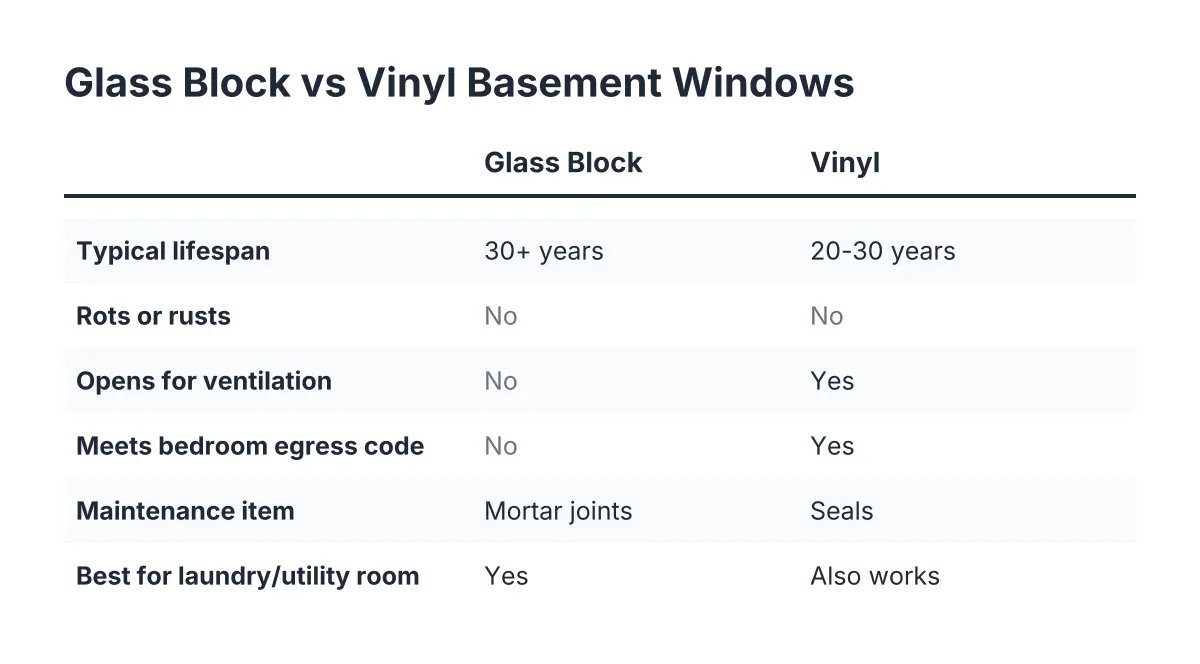
Glass block is a thick, hollow square of glass, usually a few inches deep, that installers stack and mortar together like bricks to fill a window opening. The blocks let light in but blur the view, which gives basements privacy without curtains. They are strong and hard to break, which is why homeowners like them for ground-level openings. The tradeoff is that a mortared panel does not open, so it cannot serve as an escape route.
Block Windows
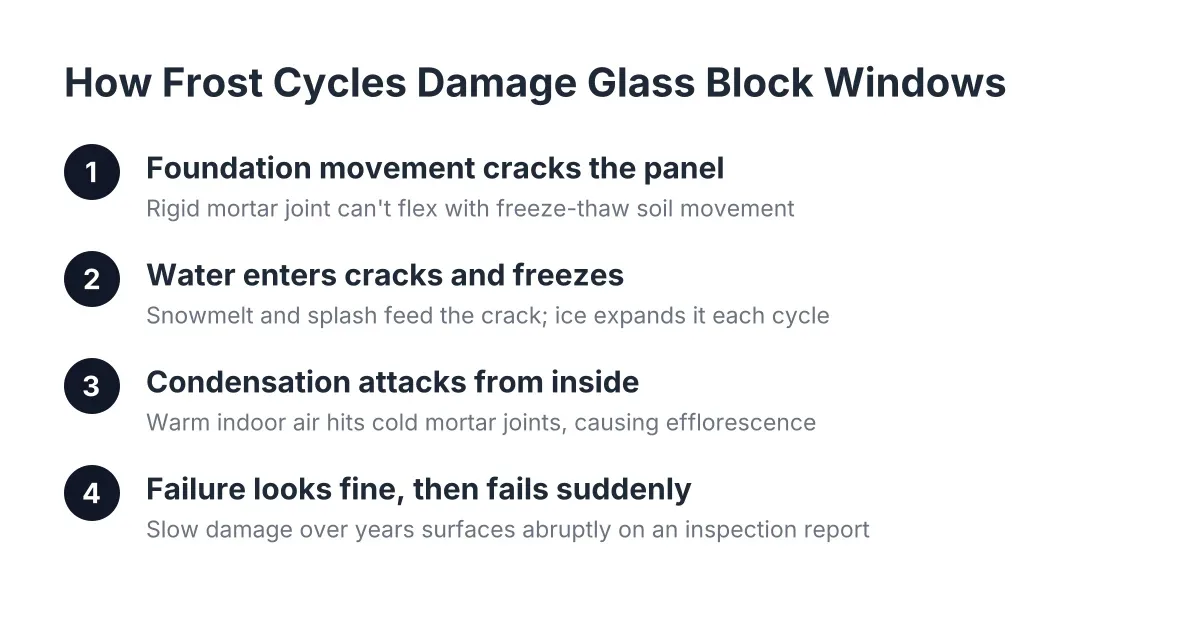
Block windows are basement windows built entirely from glass block instead of a framed sash with a pane. They resist break-ins, block drafts when the mortar is sound, and never need painting. In Minnesota, freeze and thaw stress can crack the mortar over time, which is the most common reason they fail. Our article on why glass block basement windows fail in Minnesota frost cycles explains what to watch for.
Egress Window
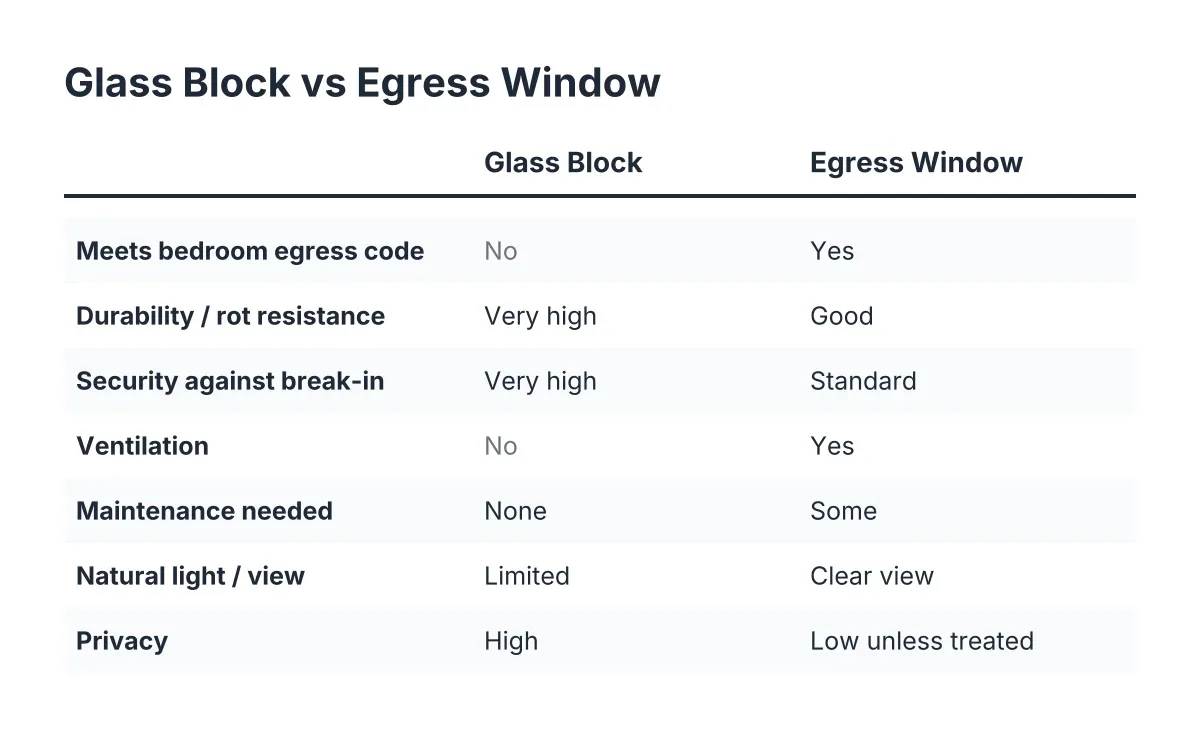
An egress window is a window large enough for a person to climb out of, or for a firefighter to climb in through, during an emergency. Building codes set minimum sizes for the opening, and basement bedrooms almost always require one. This is the single most important term in any basement window installation quote. If a contractor says your basement bedroom needs an egress window, they are talking about safety code, not an upsell. See how glass block windows compare to traditional egress windows when code is the deciding factor.
Vented Glass Block
A vented glass block panel is a glass block window with a small hinged or sliding vent built into the middle of the panel. It lets you get fresh air into a basement laundry room or utility space without giving up the security of block. The vent is small, so it does not count as an escape opening. It adds a step to installation, which a good quote will list separately.
Code and Safety Terms
Code language trips up more homeowners than any other jargon. These entries from the glass block windows glossary translate the rulebook words into plain English.
Bedroom Egress Requirement
The bedroom egress requirement is the building code rule that every sleeping room must have a way out other than the door, usually a window big enough to escape through. If you finish a basement and call a room a bedroom, this rule applies to it. Glass block cannot meet it, because a mortared panel does not open. This is why finishing a basement often means replacing a block window with a true egress window.
Code Compliance
Code compliance means the finished work meets your city's building rules for size, safety, and construction method. For basement windows, that covers the opening size, the height off the floor, and the window well outside. A quote that mentions code compliance is telling you the installer plans to pass inspection, not just fill a hole. Always ask how the proposed window meets code for the room's intended use.
Permit
A permit is the city's written approval to do the work before it starts. Cutting a larger opening in a foundation wall for an egress window typically requires one. If a bid skips the permit, the work may not pass inspection and can cause problems when you sell the house. A local installer who pulls permits routinely will mention it without being asked.
Frost Cycle
A frost cycle is one round of the ground freezing and then thawing, and Minnesota winters bring many of them each year. Each cycle moves soil and stresses anything set into it, including window wells, foundations, and the mortar in glass block panels. This is why a window that holds up fine in a mild climate can crack here within a decade. Our guide to glass block durability and lifespan in cold climates covers what Minneapolis weather does to these windows over time.
The Work Outside the Window
An egress window below ground level needs a dug-out space and good drainage. These terms describe that part of the job.
Window Well
A window well is the open, dug-out area outside a basement window that sits below ground level, held back by a curved liner. It keeps soil away from the window and gives a person room to climb out through an egress window. Wells for egress windows must be large enough to stand in. If your quote includes window well installation, this is the structure being built.
Window Well Installation
Window well installation is the process of digging out the soil, setting the well liner against the foundation, anchoring it, and adding gravel at the bottom for drainage. It is a separate line item from the window itself on most quotes. Poor drainage in the well is a leading cause of wet basements, so ask how the installer handles water at the bottom. Done right, the well outlasts the window.
Galvanized Window Well
A galvanized window well is a steel well liner coated in zinc so it resists rust in wet soil. Galvanized wells are the standard choice in the Twin Cities because they handle frost pressure and stay affordable. Plastic and composite wells exist too, but steel takes soil movement better. If a bid does not name the well material, ask.
Grading
Grading means sloping the soil around the well and foundation so rainwater runs away from the house instead of toward it. Even a well-built window well fails if the yard drains into it. A thorough installer checks grading as part of the job and tells you if the slope works against you. It costs little to fix during installation and a lot to fix after a flood.
Reading a Quote
These terms show up on paper. Knowing them helps you compare bids on scope instead of price alone.
Rough Opening
A rough opening is the framed or cut hole in the wall that the window fits into, measured before the window goes in. Enlarging a rough opening in a concrete foundation is a big part of an egress installation, and it drives labor cost. If two quotes differ, check whether both include cutting the opening larger. A quote that only swaps the window in the existing hole covers less work.
Sill
The sill is the bottom edge of the window opening, the surface the window sits on. Code limits how high an egress window sill can be off the basement floor, so people of different heights can climb out. Rotten or crumbling sills are a common reason for basement window replacement even when the glass is fine. An installer who inspects the sill before quoting is doing the job right.
Mortar Joint
A mortar joint is the cement seam between glass blocks that holds a panel together and seals out air and water. Joints are usually the first part of a block window to fail, showing hairline cracks or white powdery staining. Cracked joints leak water and cold air long before the glass itself breaks. If your joints are failing, repair is sometimes possible, but replacement is often the better long-term answer.
Free Quote
A free quote is a written estimate for the work at no cost and with no obligation to hire. It should list the window, the well, the excavation, and any grading or permit work as separate items you can compare. Pricing varies by project, since foundation type, soil, and opening size all change the labor involved. For what drives the numbers on block projects specifically, see how glass block window cost is figured.
Using These Terms
What this glass block windows glossary gives you is the ability to read a basement window quote line by line and know what each item pays for. You can now ask whether a window meets the bedroom egress requirement, what the well is made of, and who pulls the permit. Those three questions alone separate a complete bid from a thin one.
If you need basement egress window installation, Minneapolis Window Pros can help.
Prefer to talk it through? Call (612) 482-9787 — a quick call is usually the fastest way to get a straight answer for your situation.