Glass Block Windows vs. Traditional Egress Windows: Which One Meets Code?
If a home inspector just flagged your basement windows, you are probably weighing glass block vs egress options against each other and wondering which one actually clears the inspection. The answer depends on one question above all: is the room a bedroom? Glass block works well for laundry rooms, utility spaces, and basement bathrooms. It does not meet bedroom egress code anywhere in Minneapolis. This guide compares the two options on durability, looks, cost drivers, and code compliance so you fix the right thing before closing, not the cheap thing that gets flagged again.
The Short Answer: Where Each Window Belongs
Glass block windows suit non-bedroom basement spaces where security, privacy, and low maintenance matter more than airflow or emergency exit. Traditional egress windows are required in any basement bedroom or sleeping room. If your inspection report mentions a bedroom, glass block is off the table for that opening.
Here is the practical split most Minneapolis homeowners land on:
- Laundry room, mechanical room, storage area: glass block is a solid, durable fix for old rotted frames.
- Basement bathroom: glass block, often with a small vent panel for moisture.
- Finished rec room with no sleeping area: either can work; check what your buyer expects.
- Basement bedroom, or any room a buyer plans to market as a bedroom: a code-compliant egress window with a proper window well. No exceptions.
That last line matters more in a home sale than anywhere else. A buyer's agent will list a basement room as a bedroom only if it has legal egress. Sellers who install glass block in a bedroom opening to save money often end up paying twice: once for the block, and again for the egress window the buyer demands.
Does Glass Block Meet Egress Code in Minneapolis?
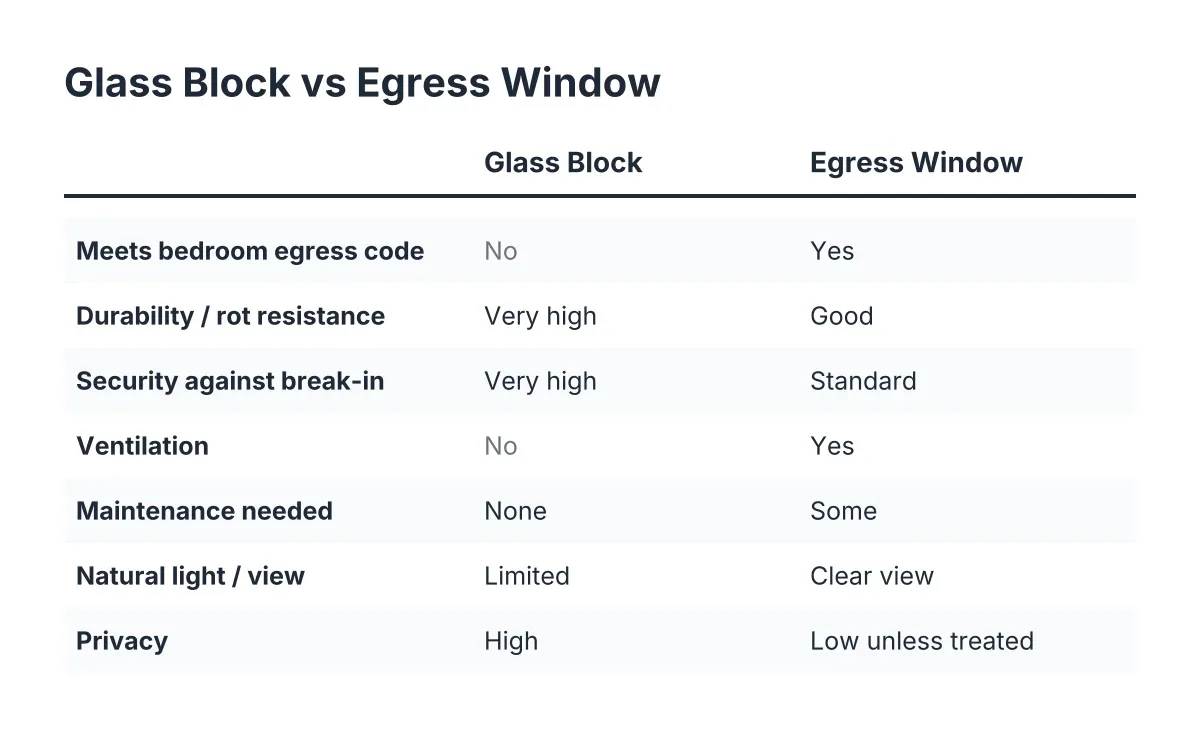
Glass block does not meet egress code for basement bedrooms in Minneapolis or anywhere else that follows the International Residential Code. Egress requires an openable window with a minimum net clear opening of 5.7 square feet, according to HomeAdvisor's summary of IRC requirements. Glass block is fixed masonry; you cannot open it or climb through it in a fire.
The same IRC standard requires a window well that projects at least 36 inches from the house with a nine square foot footprint when the window sits below grade. In addition, the City of Minneapolis rental property checklist specifies that a proper egress window or door must open to the outside for each bedroom, per city code. Inspectors here know these numbers, and so do buyers' inspectors.
Therefore, if the flagged window serves a bedroom, the fix is an egress window for basement use, cut to size, with a compliant window well. If the flagged window serves a laundry or utility room, you have real freedom to choose, and glass block deserves a hard look.
One caution: room classification is not always obvious. A basement office with a closet can get treated as a bedroom by an appraiser or a city inspector. When in doubt, confirm with the city or a local installer before you order materials.
How Glass Block Compares to Traditional Windows on Durability
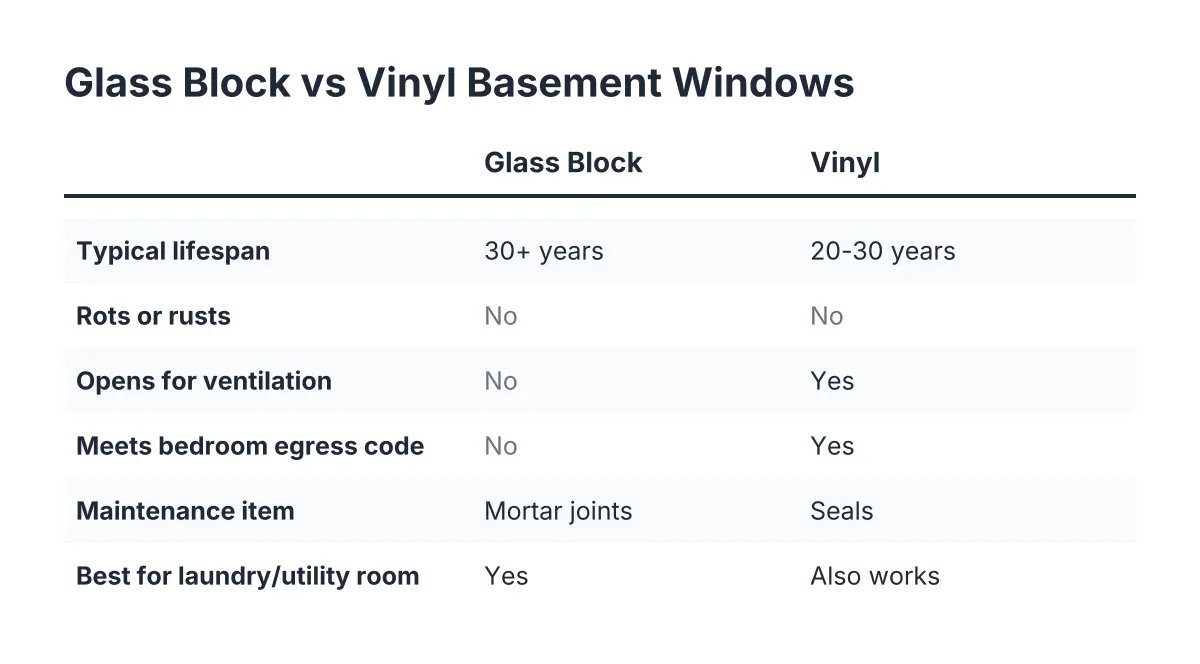
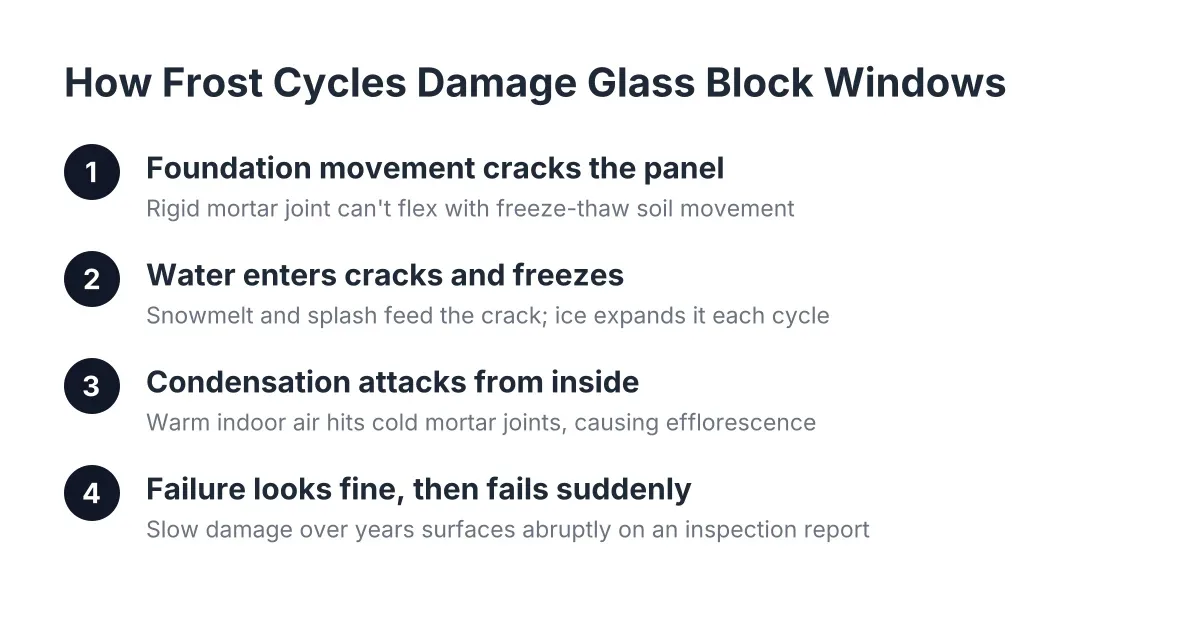
On raw durability, glass block wins. A mortared glass block window has no moving parts, no sash to rot, no balance springs to fail, and no locks to break. The block itself is thick pressed glass set in mortar or silicone, and it shrugs off the freeze-thaw cycles that destroy old wood basement frames in Minnesota winters.
Traditional basement windows, whether vinyl sliders, hoppers, or full egress casements, have more that can go wrong. Seals fail. Hardware wears. Wells collect water if the grading is wrong. That said, a well-installed vinyl egress window with a properly drained window well routinely lasts decades. The durability gap is real but smaller than glass block marketing suggests.
Where glass block clearly earns its keep:
- Security. Breaking through mortared block takes serious effort and noise. For ground-level openings in an alley-facing wall, that matters.
- Rot resistance. Block sits in mortar, not a wood buck, so the classic Minneapolis problem of a crumbling 1950s steel or wood frame goes away.
- Air sealing. A fixed block panel does not leak around a sash because there is no sash. Basements feel less drafty.
- Zero maintenance. No painting, no reglazing, no hardware to lubricate.
The trade-offs are just as concrete. Glass block gives you no ventilation unless you add a vent panel, and vent panels are the weakest link in the assembly. You lose most of your view and some daylight compared to clear glass. In the meantime, if the opening ever needs to become an egress window, you are chiseling out masonry, not swapping a sash.
Looks: Glass Block vs Egress Window Styles Side by Side
Aesthetics are where opinions split, and where a pre-sale seller should think about the buyer, not personal taste. Glass block reads two ways. In a utility room or a mid-century Minneapolis rambler, it looks intentional and clean. In a finished basement styled to feel like upstairs living space, it can read dated, the same way some buyers react to a glass block wall in an older bathroom.
Traditional windows, by contrast, look like windows. A vinyl slider or an egress casement lets in clear light, frames a view of the window well or yard, and matches the windows upstairs. For a finished basement you are trying to show as usable square footage, that visual continuity helps the space feel like part of the house instead of a converted cellar.
Privacy flips the comparison. Glass block obscures everything behind it while still passing daylight, which is exactly what most people want in a basement bathroom or a street-facing laundry window. Achieving the same privacy with a traditional window means frosted glass, film, or blinds, all of which a buyer may or may not keep.
For example, say a homeowner in South Minneapolis is prepping a 1948 story-and-a-half for listing. The inspector flagged three original steel basement windows: two in the laundry and mechanical area, one in a room the sellers staged as a guest bedroom. In that scenario, the practical package is glass block windows for basement openings in the utility spaces and a full egress window with a window well for the bedroom. The seller fixes the inspection items, the bedroom stays a legal bedroom in the listing, and the buyer's inspector has nothing new to flag.
Cost Drivers: Why the Two Options Price So Differently
Glass block and egress windows sit in different cost categories because the work is different. A glass block window installation is mostly a swap: pull the old unit, prep the masonry opening, set pre made glass block panels or lay block in mortar, and seal. No excavation, no concrete cutting, no window well installation.
An egress window is a small construction project. The crew cuts the foundation opening larger, sets a new window sized to the 5.7 square foot clear-opening rule, excavates outside the wall, installs the window well, and grades for drainage. According to HomeAdvisor, installing an egress window averages $4,229, with most homeowners spending between $2,723 and $5,877. Angi reports a similar national average of $4,244 per window, and puts an egress window plus well at about $3,900 on average.
Those are national reference points, not quotes. Your number moves with a few specific factors:
- Foundation type. Cutting poured concrete costs more than enlarging an opening in block.
- Soil and depth. Minneapolis frost depth and clay-heavy soils affect excavation and drainage work.
- Well style. A galvanized window well prices differently than a composite or timber well.
- Opening condition. A rotted buck or spalled masonry adds prep time to either option.
- Access. Tight side yards and landscaping in the dig path slow excavation.
Consequently, for a pre-sale fix on a non-bedroom window, glass block is usually the lower-cost path by a wide margin. For a bedroom, the egress cost is not optional, and trying to avoid it with block just moves the expense into your closing negotiation. Pricing varies enough by project that the useful move is a written quote on your specific openings, not a number pulled from a national chart.
The Pre-Sale Math: Fixing It Before the Buyer Prices It for You
Inspection items get more expensive after the buyer sees them. Before listing, you control the scope: you pick the contractor, the materials, and the schedule. After a repair addendum arrives, the buyer effectively sets the scope, and buyers pad their asks because they are pricing unknowns.
A documented quote changes that dynamic even if you do not do the work before closing. Suppose your buyer's inspector flags a deteriorated basement window and the buyer's attorney asks for a credit. With a written quote from a local installer in hand, you can counter with an exact figure for basement window replacement instead of accepting the buyer's rounded-up estimate. Paper beats guesses in a negotiation.
Timeline is the other pressure point. Glass block installs are fast; a typical crew can replace several utility-room block windows in a day because there is no digging. Egress projects take longer, since they involve excavation, concrete cutting, and a window well, and winter ground conditions in Minneapolis can stretch scheduling. Therefore, if your closing date is set and the inspection flagged a bedroom window, get the egress quote moving first. It is the long pole in your schedule.
One honest limitation: no article can tell you how your specific city inspector or appraiser will classify a borderline room, and structural surprises inside a foundation wall do happen. A site visit from a professional who works on Minneapolis basements is the only way to turn estimates into a firm scope.
Choosing Between Glass Block and Traditional Windows, Opening by Opening
Most houses do not need one answer. They need an answer per window. Walk your basement with the inspection report and sort each flagged opening into one of three buckets.
First, bedroom or possible bedroom. This bucket gets a traditional egress window, sized to code, with a compliant window well. The bedroom egress requirement is the one item a buyer will not waive, because their lender and insurer care about it too.
Next, wet or private spaces. Bathrooms and laundry rooms are the natural home for block windows. You get privacy without blinds, a masonry-tight seal against moisture, and a unit that will outlast the mortgage. Add a vent panel if the room has no other ventilation.
Finally, finished living areas without sleeping. Here the comparison of glass block windows, traditional vinyl units, and full egress upgrades becomes a judgment call. If the room is marketed as flexible space, a clear traditional window keeps it bright and buyer-friendly. If you might finish it into a bedroom later, or a future buyer might, spending on the egress window for basement use now is cheaper than opening the wall twice.
As a rule of thumb for 2026 code compliance in Minneapolis: block where you never need to climb out, egress where anyone might sleep, and clear traditional glass where light and resale appeal drive the choice.
What a Straight Quote Should Include
Whichever direction you go, the quote you hand a buyer or attorney should be specific enough to end the conversation. A useful quote for this work lists the opening dimensions, the window type and material, masonry or concrete work included, the window well style if applicable, drainage and grading scope, and cleanup. Vague one-line quotes invite the buyer to assume the worst.
Ask the installer directly whether the proposed fix meets code for how the room is used. A local installer who works in Minneapolis basements should answer that question in plain language, name the clear-opening and window well requirements, and put the answer in writing. If a contractor cannot tell you whether glass block passes for the room in question, keep calling until one can.
The comparison comes down to this. Glass block is the durable, private, low-maintenance choice for the basement rooms nobody sleeps in. A traditional egress window is the legal, light-filled, resale-safe choice for the rooms someone might. Match the window to the room, get the scope in writing, and the inspection item becomes a line on a closing checklist instead of a renegotiation.
If you need basement egress window installation, Minneapolis Window Pros can help.
Prefer to talk it through? Call (612) 482-9787 — a quick call is usually the fastest way to get a straight answer for your situation.