What to Expect From Window Installers in Minneapolis: First Call to Final Walkthrough
If an inspection report just flagged your basement windows, or your buyer's agent sent a repair addendum with a closing date attached, you need to know what happens next. This guide walks through what good window installers in Minneapolis actually do, step by step, from the first phone call to the final walkthrough. Knowing the process helps you spot a fair quote, keep your timeline, and close the inspection item without giving the buyer room to renegotiate.
The steps below apply whether you need one basement window replaced, a full egress window with a window well, or replacement windows on the main floors. The order rarely changes. What changes is how much digging, cutting, and framing sits between step one and step seven.
Step 1: Make the First Call and Describe the Problem Clearly
Start by telling the installer exactly what prompted the call. If a home inspector flagged the windows, say so, and read the exact language from the report. "Basement bedroom lacks a code-compliant egress window" is a different job than "basement window frame is rotted and does not latch." The first may require cutting the foundation and installing a window well. The second may be a straightforward basement window replacement.
Have a few details ready before you dial:
- The rough size of each window and how many need work
- Whether the basement room is used, or marketed, as a bedroom
- Whether the basement is finished or unfinished
- Your closing date or listing date, if you have one
- Photos of each window from inside and outside
A local installer who knows Minneapolis housing stock can often tell from this call whether you are looking at a repair, an insert replacement, a full-frame replacement, or a new egress window. If the person on the phone cannot explain the difference between those options in plain language, keep calling around.
Why the bedroom question matters for Minneapolis window installers
The bedroom egress requirement is usually the deciding factor between a simple swap and a bigger project. According to City of Minneapolis code, each bedroom below the fourth floor must have a window at least 20 inches wide by 24 inches high, with nothing blocking it. The city's rental property checklist also specifies that a proper egress window or door must open to the outside. If the buyer plans to count that basement room as a bedroom, a small glass block window will not satisfy code compliance. An egress window and window well will.
Step 2: Schedule the On-Site Measurement and Walkthrough
Next, expect the installer to come measure in person. A quote built from photos alone is a guess, and guesses blow up timelines. During the visit, the installer should measure each opening, check the condition of the frame and foundation around it, and look at grading and drainage outside the basement windows.
For egress work, the walkthrough covers more ground. The installer should look at where the foundation would be cut, where the window well would sit, how deep it needs to go, and whether a window well extension is needed to clear the grade. Minneapolis frost depth and soil conditions affect how the well is set and drained, so a local installer should talk about drainage at this stage, not after water shows up.
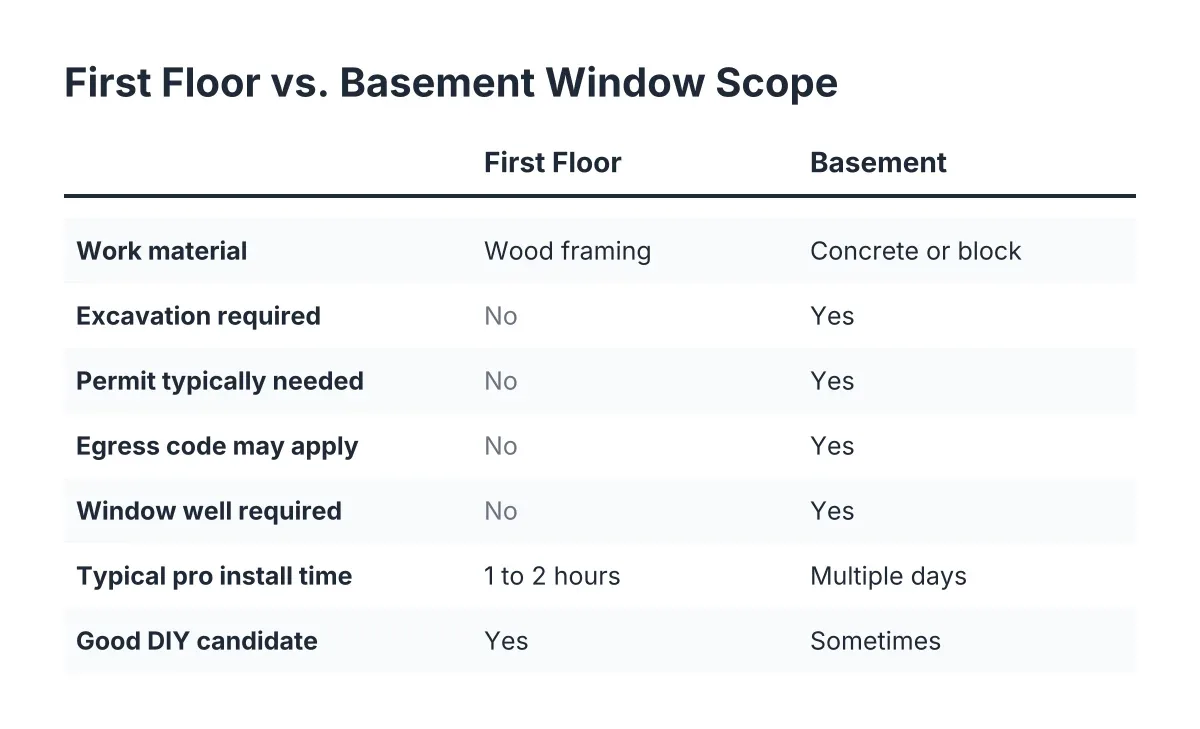
This is also when you should ask about permits. Cutting a foundation for a new egress window typically requires a permit; swapping a window into an existing opening often has lighter requirements. A good installer tells you who pulls the permit and builds that time into the schedule. If your situation involves structural questions or unusual foundation conditions, get a structural professional involved rather than relying on a window quote alone.
Step 3: Review the Written Quote Line by Line
A real quote is written, itemized, and tied to your specific openings. For a pre-sale fix, this document matters twice: once for you, and once for the buyer's side. A clear scope of work on paper shows the buyer the item is being handled professionally, which takes negotiating leverage off the table.
A fair quote for basement window installation or egress work should spell out:
- Window type and size for each opening (double-hung, casement, glass block, or egress unit)
- Whether each opening is an insert replacement or a full-frame replacement
- Excavation and foundation cutting, if any
- Window well type, such as galvanized wells, and any window well extensions
- Drainage provisions for the well
- Interior finish work, especially in a finished basement
- Permit handling, haul-away, and cleanup
- Total price and payment terms
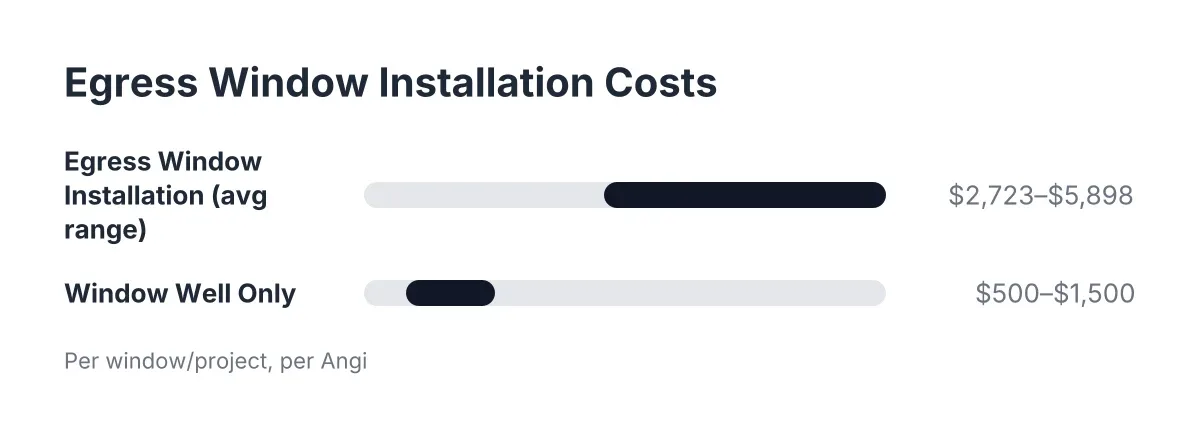
Pricing varies by project, so compare scope, not just the bottom line. For context, egress window installation costs average $4,244 nationwide, with most homeowners spending between $2,723 and $5,898 per window, according to Angi. HomeAdvisor reports a similar average of $4,229. Angi also notes that installing a window well alone runs from $500 to $1,500 or more. If one quote comes in far below those ranges for a full egress install, read the scope again; something is probably missing, often drainage or interior finishing.
Step 4: Confirm the Schedule Against Your Closing Date
Then lock the timeline down in writing. Ask three direct questions: when can materials arrive, when can the crew start, and how many days on site will the work take. Standard replacement windows in existing openings often take under a day per window once materials are in hand. A new egress window with excavation and foundation cutting usually takes longer, commonly one to a few days of site work depending on conditions.
The lead time on the window itself is often the longest part of the wait, not the labor. Stock sizes move faster than custom orders. If your closing is six weeks out, say so on the first call and let the installer confirm whether the schedule works before you sign anything. Winter work is possible in Minneapolis; crews work one opening at a time and seal as they go, though frozen ground can slow excavation for new wells.
Step 5: What to Expect from Minneapolis Window Installers on a Tight Timeline
Yes, most window installers in Minneapolis can handle a pre-sale repair within a normal closing window, provided the window size is in stock or can be ordered quickly. The riskiest timeline is a custom-sized egress unit ordered late. Therefore, get measurements and the order placed as early as possible, even if the install date is weeks out. For example, suppose a homeowner in the Longfellow neighborhood gets a repair addendum with a 45-day close. If the installer measures in week one and orders a stock egress unit, the cutting, well installation, and finish work can land comfortably before closing. If the homeowner waits three weeks to get quotes, the same job gets tight.
Step 6: Prepare the House Before the Crew Arrives
Before installation day, clear a working path. Inside, move furniture, storage bins, and anything on the walls near the window. In a finished basement, ask the installer how much drywall or trim will be opened up and who patches it afterward; that answer should already be in your quote. Outside, clear the area along the foundation where the crew will work or dig.
In addition, plan for noise and dust. Foundation cutting is loud and dusty, and the crew should contain the dust with plastic sheeting inside. Pets and kids should be elsewhere during cutting. None of this is complicated, but handling it the day before keeps the crew moving and protects your schedule.
Step 7: Know What Happens on Installation Day
On the day itself, a typical crew follows a predictable sequence. For a replacement in an existing opening, they pull the old unit, clean and square the opening, and set the new window with shims so it sits plumb and level on all sides. Proper shimming and leveling is what prevents air leaks and water intrusion later, and it is the main difference between professional window installation and a rushed DIY job. The crew then fastens the frame, insulates the gap, seals the exterior, and finishes the interior side.
For a new egress window, the day starts outside. The crew excavates at the foundation, cuts the opening in the concrete, and frames the rough opening with pressure-treated lumber where the wood meets masonry. The window goes in, gets shimmed and sealed, and the window well is set against the foundation and backfilled with drainage material. A window well extension is added if the well needs to rise above grade. Done right, the result is a dry, code-compliant opening that an appraiser or buyer's inspector can check off without comment.
What separates careful window installers from the rest
Careful installers in Minneapolis show their quality in small decisions you can watch for. They check plumb and level with a tool, not by eye. They do not force a window into an out-of-square opening; they shim it to an even gap on all sides. Additionally, they drill fastener locations based on where the window actually sits against solid wood, rather than trusting factory holes to line up. And they talk about water first, because in a basement opening, keeping water out is the whole job.
Step 8: Do the Final Walkthrough and Collect Your Paperwork
Finally, walk the job with the installer before the crew leaves. Open and close every window. Check that locks engage, screens fit, and the exterior sealant is continuous. For egress windows, confirm the unit opens fully with nothing blocking it, and look into the well for standing debris or loose backfill.
Then collect the paperwork: the final invoice marked paid, the permit record and inspection sign-off if one was required, and the manufacturer warranty documents. For a pre-sale fix, hand copies to your agent the same week. A closed permit and a paid invoice are the cleanest possible answer to a repair addendum, and they end the conversation before the buyer's side can reopen it.
One honest note on expectations: window replacement fixes the window, not every basement moisture problem. If water has been entering through the wall or floor rather than the window, say so during the first call, because that may need grading or waterproofing work alongside the new window. A straight answer up front beats a surprise during the buyer's final walkthrough.
If you are staring at an inspection report and a closing date, the fastest move is to get measured and get a written quote. We install and replace windows on every floor of Minneapolis homes, with basement egress windows and window wells as a specialty, and quotes are free. Reach out, describe what the inspector flagged, and we will give you a straight answer on scope, cost, and schedule.
If you need basement egress window installation, Minneapolis Window Pros can help.
Related guide: window installation — Complete Guide
Prefer to talk it through? Call (612) 482-9787 — a quick call is usually the fastest way to get a straight answer for your situation.