Window Installation Terms Explained: A Plain-English Glossary
If you are getting quotes for new windows and keep running into words you half understand, this window installation glossary is for you. It explains the terms Minneapolis homeowners see on quotes, in contracts, and in conversations with installers. Use it to read a bid line by line, ask sharper questions, and spot gaps before you sign anything. No sales talk, just plain answers.
- Window Replacement: swapping old windows for new ones
- Full-Frame Replacement: everything comes out, down to the rough opening
- Insert Replacement: new window inside the old frame
- Rough Opening: the hole in the wall the window fits
- Double-Hung Window: both sashes slide up and down
- Casement Window: cranks open like a door
- Sash: the part of the window that holds the glass
- Flashing: the layer that keeps water out around the window
- Low-E Glass: a coating that cuts heat loss
- Egress Window: a basement window big enough to escape through
- Bedroom Egress Requirement: the rule that bedrooms need an escape route
- Window Well: the dug-out space outside a basement window
- Galvanized Window Well: a rust-resistant steel well liner
- Glass Block Window: solid glass units mortared in place
- Code Compliance: meeting local building rules
- Free Quote: a no-cost, written price for your project
- Scope of Work: the written list of what the installer will do
Types of Window Work
These are the terms that describe what kind of job you are actually buying. They matter more than any other part of a quote, because they decide the price and how long the crew is in your house.
Window Installation Replacement Methods
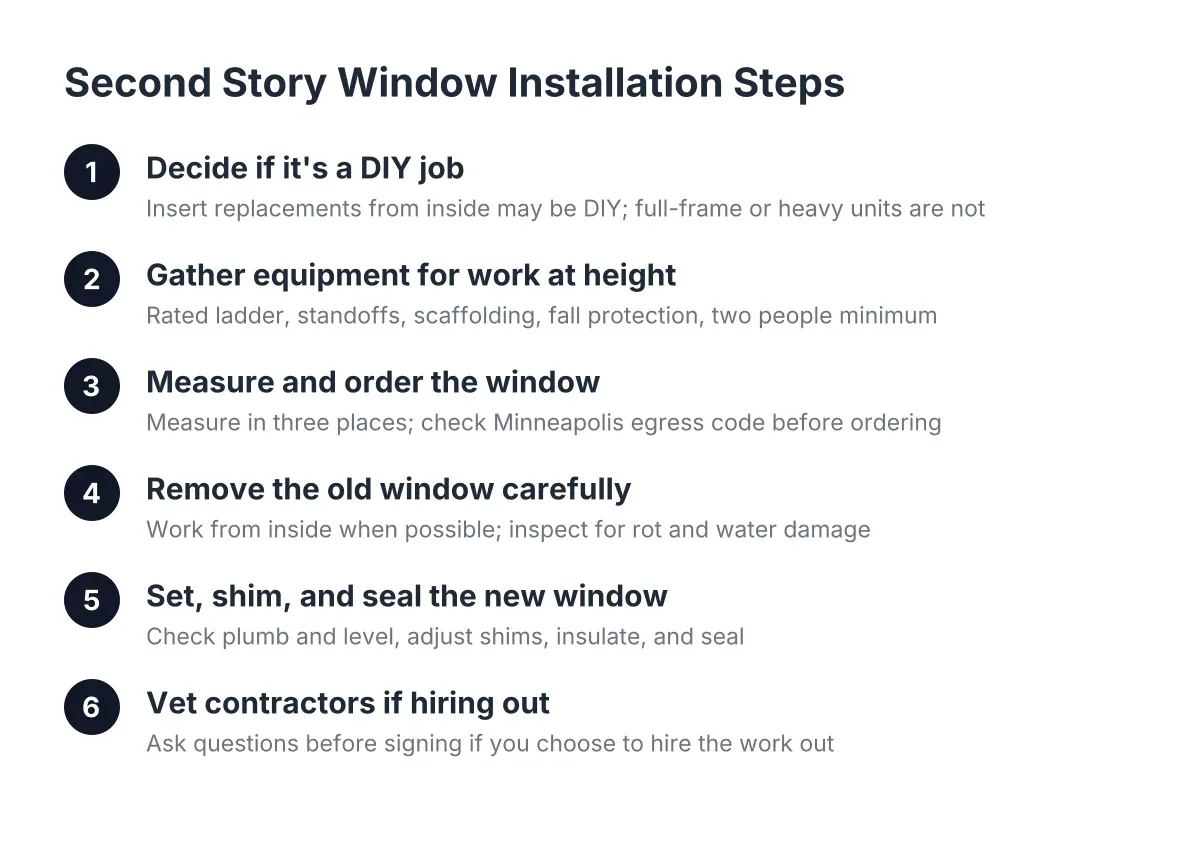
Window replacement means taking out an existing window and putting a new one in the same opening. It is the most common job a window installer does, and it covers everything from one cracked bedroom window to a whole house of replacement windows. Your quote should say whether each opening gets a full-frame or insert replacement, because those are different jobs with different costs. If a quote just says "replace 8 windows" with no method listed, ask which one you are getting.
Full-Frame Replacement
A full-frame replacement is a window replacement where the entire old window comes out, frame and all, down to the bare opening in the wall. It costs more and takes longer than an insert, but it lets the installer fix rot, add insulation, and keep the full glass area. It is the right call when the old frame is rotted, out of square, or leaking. An installer who recommends full-frame on an old Minneapolis house is usually protecting you, not padding the bill.
Insert Replacement
An insert replacement is a new window installed inside the existing frame, which stays in the wall. It is faster and less disruptive than full-frame work, and it usually costs less. The trade-off is a slightly smaller glass area and the risk of sealing a new window into a frame that has hidden problems. Inserts only make sense when the old frame is solid and square.
Rough Opening
A rough opening is the framed hole in the wall that a window fits into. Installers measure it before ordering, because new windows are sized to fit the opening with a small gap for shimming and insulation. If a quote mentions "modifying the rough opening," that means cutting or reframing the wall, which adds labor. Enlarging a basement opening for an egress window is the most common example.
Window Styles and Parts
Knowing a few part names helps you follow what an installer is pointing at during a walkthrough, and it helps you compare quotes that list the same house in different words.
Double-Hung Window
A double-hung window is a window with two sashes that slide up and down past each other. It is the classic style on most Minneapolis homes, and both sashes usually tilt in for cleaning. Double-hungs are a common default on quotes, so check that the style listed matches what you actually want in each room.
Casement Window
A casement window is a window hinged on one side that cranks open outward like a door. Casements seal tighter than sliding styles because the sash presses against the frame when closed, which helps in a cold climate. They are a frequent pick over kitchen sinks and in spots where reaching up to lift a sash is awkward.
Sash
A sash is the frame that holds the glass inside a window, the part that actually moves when you open it. When an installer says a sash is "painted shut" or "out of square," they mean the moving part is stuck or crooked. Some repairs replace only the sash, but if the quote says sash replacement and you expected a whole new window, ask before work starts.
Flashing
Flashing is the layered material, usually metal or waterproof tape, installed around a window to steer water away from the wall. Bad or missing flashing is a top cause of rot and leaks, and you cannot see it once the trim goes on. A quote that spells out flashing work signals an installer who cares about what happens after they leave. If flashing is not mentioned at all on a full-frame job, ask how water will be kept out.
Low-E Glass
Low-E glass is window glass with a thin invisible coating that reflects heat, keeping warmth inside in winter and out in summer. In a Minneapolis winter, that coating does real work on your heating bill. Most new windows include it, but confirm it is on the quote rather than assuming.
Basement and Egress Terms
Basement work has its own vocabulary, and it is where this window installation glossary earns its keep, because these terms tie directly to safety rules and digging costs.
Egress Window
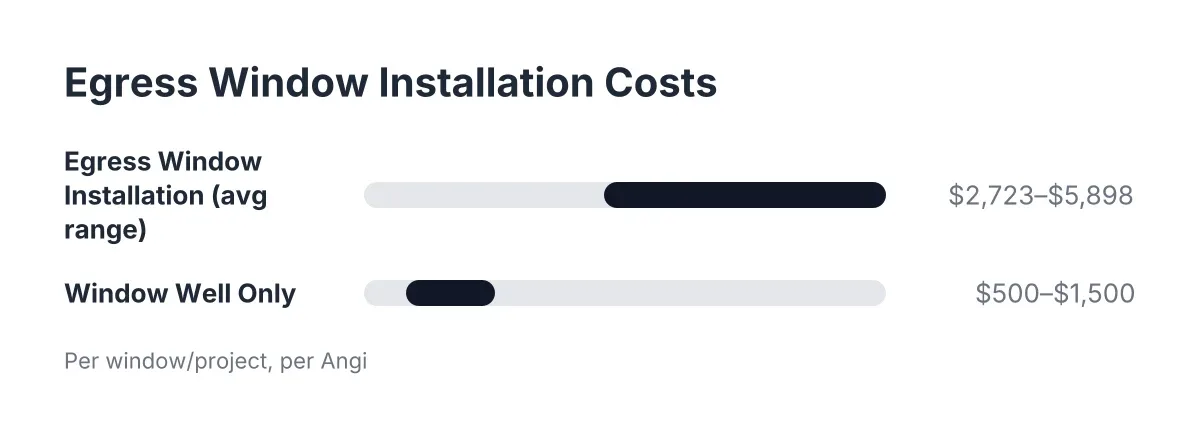
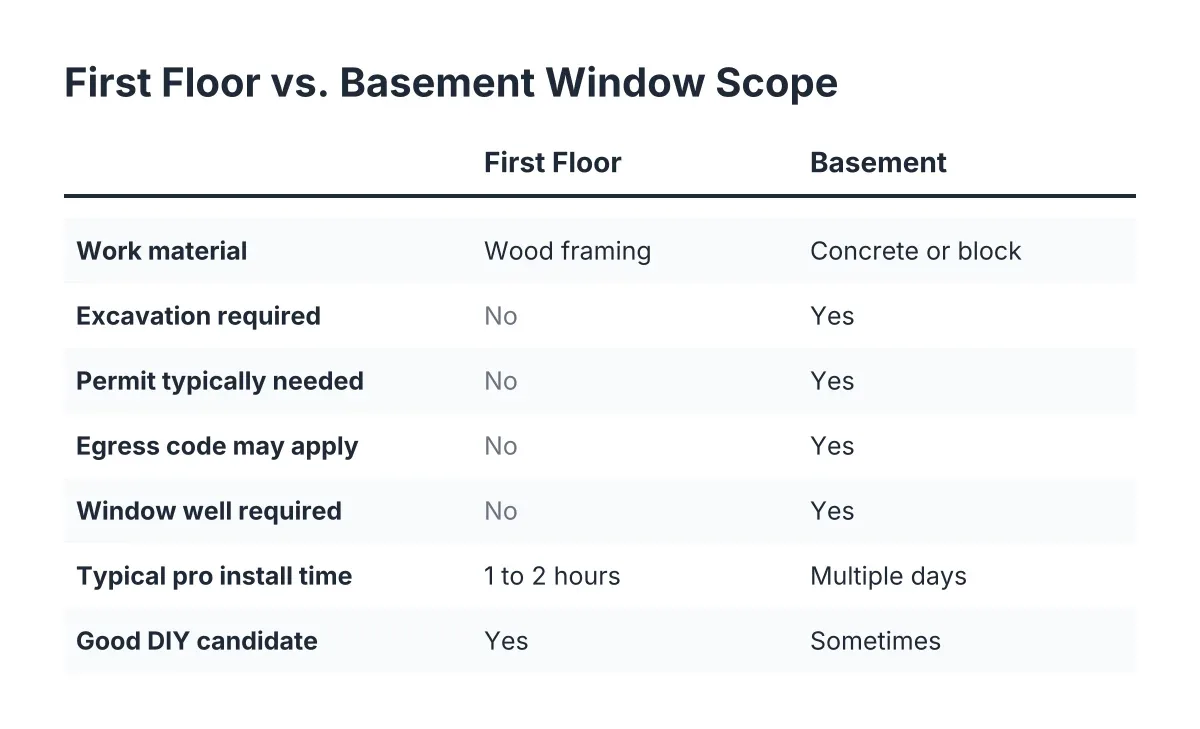
An egress window is a basement window large enough for a person to climb out of in an emergency, and for a firefighter to climb in through. Adding one usually means cutting the foundation to enlarge the opening and digging a window well outside. It is bigger work than standard window installation, so expect the quote to cover excavation, cutting, the window itself, and the well. If you are finishing a basement bedroom in Minneapolis, this is the term that will drive your budget.
Bedroom Egress Requirement
The bedroom egress requirement is the building rule that every bedroom must have an escape route to the outside, usually a door or a qualifying window. In a basement, that almost always means an egress window. This is why a "finished basement with a bedroom" project so often includes basement window installation; without a compliant window, the room cannot legally count as a bedroom. Check your local code or ask your installer what applies to your house.
Window Well
A window well is the dug-out, lined space outside a below-grade basement window that holds back soil and lets in light. A well needs to be deep enough and wide enough to use as an escape path from an egress window. Window well installation includes digging, setting the liner, and adding gravel at the bottom for drainage. A quote that skips drainage is a quote that invites a flooded well.
Galvanized Window Well
A galvanized window well is a well liner made of steel coated in zinc so it resists rust. Galvanized egress window wells are a durable, practical choice for Minnesota soil and frost, which pushes on the liner as the ground freezes and thaws. They cost less than most decorative composite wells and hold their shape for decades. If your quote lists a well, it should say what the liner is made of.
Glass Block Window
A glass block window is a window built from solid glass units mortared together like bricks, letting in light while blocking the view and the breeze. Block windows are a common basement window replacement choice for laundry rooms and utility areas where you want light and security but never need to open the window. They do not count as egress, so never use glass block in a basement bedroom opening.
Pricing and Paperwork
Code Compliance
Code compliance means the finished work meets your local building rules, including any permits and inspections the city requires. For basement and egress work it covers things like window size and well dimensions. An installer who brings up permits unprompted is doing it right. One who says "we can skip the permit" is handing you a future problem at resale or with insurance.
Free Quote
A free quote is a written price for your project that costs you nothing and commits you to nothing. A useful one lists each opening, the window style, the replacement method, and what happens to the old windows and debris. Pricing varies by project, so a real quote comes after someone measures your actual openings, not from a script. Our window installation service in Minneapolis starts with exactly that kind of measured, written quote.
Scope of Work
A scope of work is the section of a quote or contract that lists exactly what the installer will and will not do. It should name the method for each window, materials like flashing and insulation, and cleanup. Vague scopes are where surprise charges live. If two quotes differ by a lot, compare their scopes before their totals; the cheaper bid may simply include less.
Using These Terms
This window installation glossary will not make you an installer, but it will let you read a quote line by line and know what each charge buys. You can now ask whether a window gets full-frame or insert treatment, what the well liner is made of, and who pulls the permit. Those three questions alone separate careful local installers from everyone else.
If you need basement egress window installation, Minneapolis Window Pros can help.
Related guide: window installation — Complete Guide
Prefer to talk it through? Call (612) 482-9787 — a quick call is usually the fastest way to get a straight answer for your situation.