Window Installation Cost in Minneapolis: What Homeowners Actually Pay
Your inspection report came back, and the basement windows are on it. Now the buyer wants them fixed before closing, and you need a real number fast. Here is the problem: window installation in Minneapolis gets quoted all over the map, and most of the sites you find online list a phone number and nothing else. This guide walks you through how to figure out what the work should actually cost, step by step, so a repair addendum does not turn into a renegotiation of your sale price.
The steps below follow the same order a careful homeowner would use: figure out what the inspector actually flagged, learn what drives the price, then get quotes you can hand to a buyer's agent with confidence.
Step 1: Read the Inspection Report and Identify the Real Problem
Before you call anyone, figure out what kind of window problem you have. Inspectors flag basement windows for different reasons, and the fix, and the cost, depend entirely on which one applies to you.
Common inspection findings break down into a few categories:
- A damaged or rotted window. The frame is soft, the glass is cracked, or the sash will not close. This usually means basement window replacement, which is the least expensive category.
- A missing or failing window well. Water pools against the glass, or the well has rusted or collapsed. This may mean window well installation or a well replacement.
- A bedroom without a legal egress window. If your listing says three bedrooms and one is in the basement, that room has to meet the bedroom egress requirement. This is the most involved fix.
That last one matters most for sellers. Minneapolis code requires each bedroom below the fourth floor to have a window at least 20 inches wide by 24 inches high, with nothing blocking it, according to the City of Minneapolis. If your basement bedroom window is smaller than that, or blocked, a simple repair will not resolve the inspection item. You would need an egress window, which involves cutting the foundation.
Knowing which category you are in changes the conversation with every contractor. It also tells you whether a buyer's demand is reasonable or overreaching.
Step 2: Learn What Window Installation Costs in Minneapolis
Window installation costs vary widely because the work itself varies widely. A first-floor double-hung swap and a basement egress cut-in are different jobs with different crews, tools, and timelines. That is why two quotes for "fix the basement window" can look nothing alike; the contractors may be pricing different scopes.
Here are the verified national benchmarks worth knowing before anyone quotes you:
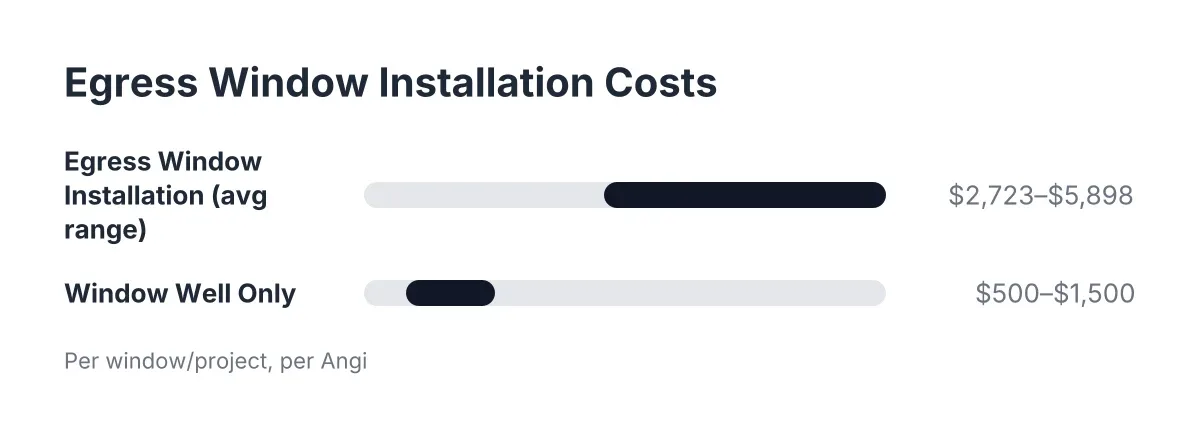
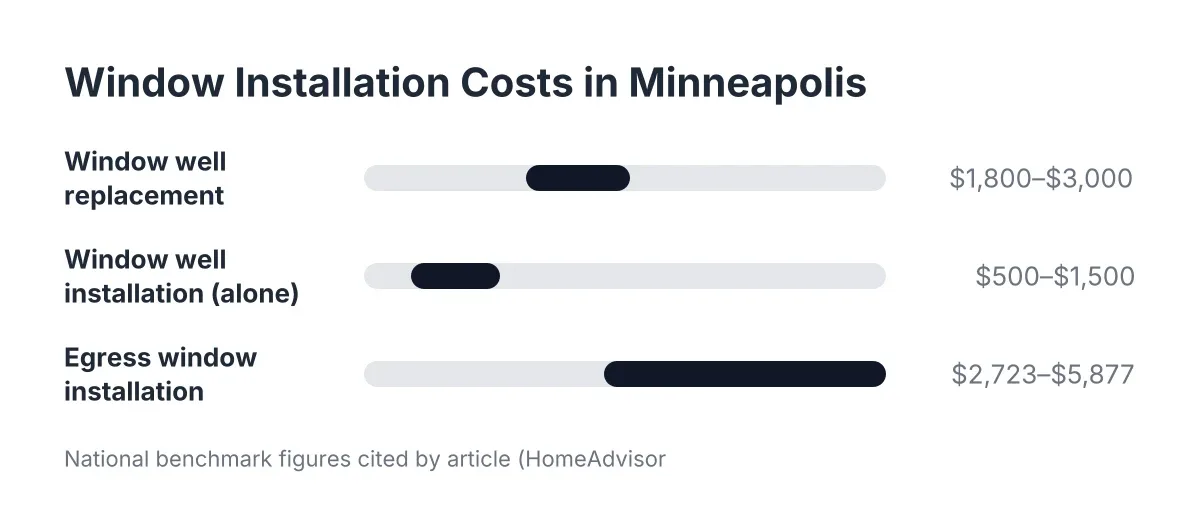
- Installing an egress window costs an average of $4,229, with most homeowners spending between $2,723 and $5,877, according to HomeAdvisor.
- Adding an egress window and well together runs about $3,900 on average, while a window well alone costs anywhere from $500 to $1,500 or more, according to Angi.
- Window well replacement costs an average of $2,200, with most homeowners spending between $1,800 and $3,000, according to HomeAdvisor.
For standard above-grade replacement windows, pricing depends on window count, size, material, and whether the installer does an insert replacement or a full-frame replacement. An insert replacement keeps your existing frame and costs less. A full-frame replacement pulls everything down to the rough opening, which costs more but fixes rot and air leaks the insert would hide.
For example, suppose a homeowner in the Longfellow neighborhood is selling a 1948 story-and-a-half with two cracked glass block basement windows and a basement bedroom with no legal egress. The block windows might be swapped for new units or fresh glass block for a modest cost per opening. The egress window, though, would likely land somewhere in that national range above, because it requires concrete cutting, excavation, a window well, and the window itself. That is an illustrative scenario, not a quote; every foundation and lot is different.
One more note on those national figures: Minneapolis frost depth means egress window wells here need proper drainage and depth, so do not assume the low end of a national range applies to a Minnesota foundation.
Step 3: Understand What a Full Quote Should Include
A fair quote spells out the scope of window installation in writing, not just a bottom-line number. When a buyer's attorney sends a repair addendum, you want documentation that shows exactly what was done and that it meets code compliance. A one-line invoice will not do that.
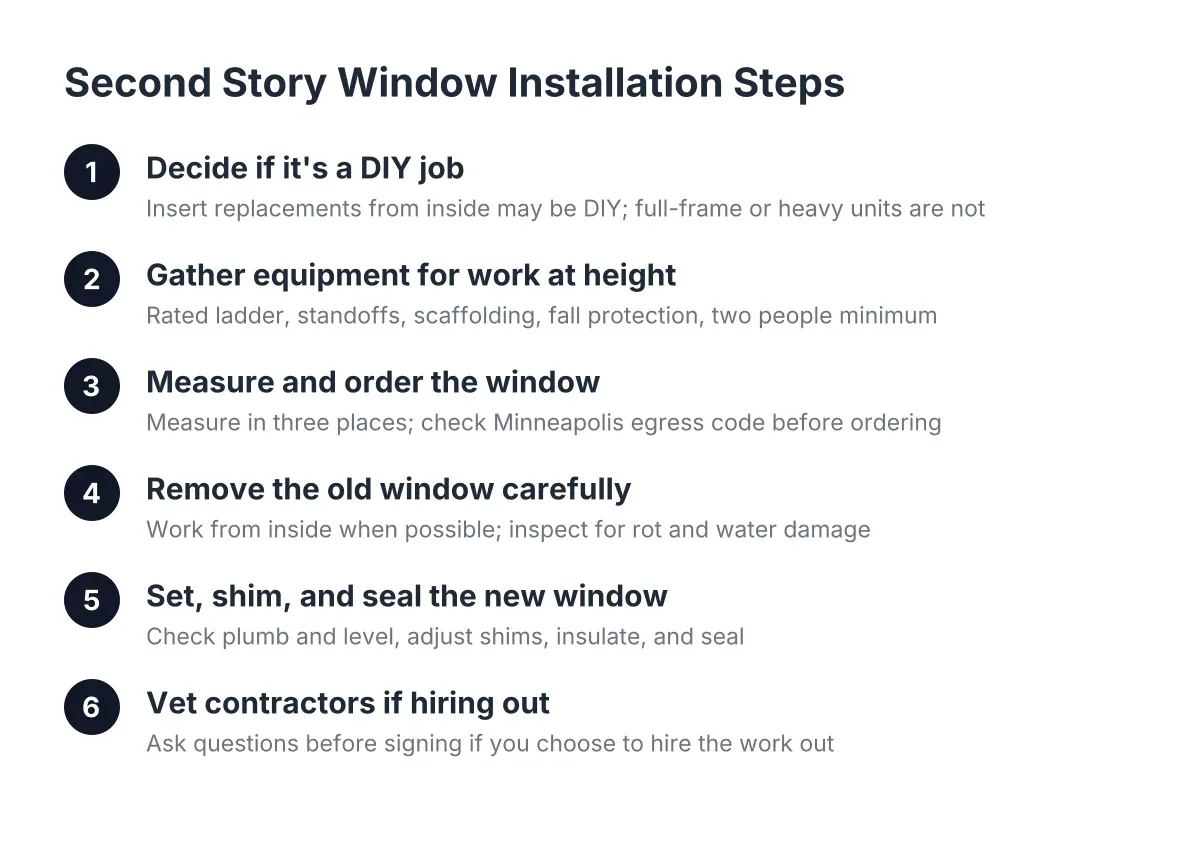
For standard replacement windows, the scope should cover:
- Measuring each opening individually, since how to measure for a replacement window matters; a unit ordered even a half inch too large will not fit, and pre-1990 Minneapolis homes rarely have uniform openings
- Removing the old unit and inspecting the frame for rot
- Setting the new window plumb and level, shimmed until the frame sits square
- Insulating, sealing, and flashing against water
- Interior and exterior trim, plus haul-away of the old windows
For basement egress work, the scope grows. The job means cutting the foundation wall, excavating outside, framing the opening, insulating it, setting the window, and installing a window well with drainage. Ask whether the quote includes the well itself, whether it is galvanized steel or another style, and whether a permit is included. In Minneapolis, egress work generally requires a permit, and you want that paperwork for closing.
Watch for what is usually extra: interior finish work in a finished basement, landscaping repair after excavation, and disposal fees. If those are not listed, ask.
Step 4: Decide What You Can Do Yourself and What Needs a Pro
Some of this work is homeowner-friendly. A basement window swap in an unfinished basement is forgiving; the finish work is rarely visible, and the main requirement is that water stays out. If you are handy and the opening is sound, replacing a small basement window or a block window is a realistic weekend project.
However, egress installation is not that project. Cutting a structural concrete wall, managing drainage below frost depth, and hitting the egress opening size are jobs for a window installer who does this regularly. One place a motivated homeowner can save money on an egress project is the outside excavation, digging the hole for the well before the crew arrives, while leaving the concrete cutting and well installation to the pros.
Timing on your sale matters here too. A botched DIY egress attempt discovered by the buyer's re-inspection is worse than the original finding. If your closing date is set, the safer path is hiring it out and getting the work documented.
There is also a materials trap. Concrete openings leave little room for adjustment, so a stock window from a home improvement store often will not fit the actual opening. A custom-sized unit ordered to your measured opening usually installs cleaner and faster, which matters when you have weeks, not months.
Step 5: Plan Around Minneapolis Timelines and Seasons
Most standard window replacements take under a day per handful of windows once the units arrive. An egress cut-in typically runs one to a few days on site, depending on soil, weather, and how the excavation goes. The longer wait is usually the window order itself, since custom-sized units take time to arrive.
Can you install windows in a Minneapolis winter? Yes, for above-grade replacement windows; crews work one opening at a time to limit heat loss. Egress work is harder in winter because frozen ground slows excavation, though it is still done. If your closing lands in February, raise the timeline question with every contractor on the first call.
Therefore, if you are listing in spring, get quotes now. Ordering windows before you sign a purchase agreement keeps a four-week lead time from colliding with a 30-day close.
Step 6: Get Quotes for Minneapolis Window Installation the Smart Way
Get at least two quotes, and make them comparable. When quotes vary wildly, it is usually because the scopes differ, not because one contractor is honest and the other is not. Ask each installer three questions:
- Is this an insert replacement or full-frame replacement, and why? The answer tells you whether they looked at your frames or quoted from a script.
- For egress work, does the price include the permit, the window well, drainage, and haul-away? Missing line items are where "cheap" quotes grow later.
- Will you put the scope in writing so I can attach it to a repair addendum? Any installer used to working with sellers will say yes without hesitation.
A local installer who works on Minneapolis houses can also speak to the specifics that national call centers cannot: clay-heavy soil, frost depth, older foundation types, and which window well styles hold up here. Casement windows, for instance, are often the practical choice for basement egress because they open the full frame and meet the clear-opening requirement in a smaller unit than a double-hung.
One honest trade-off: getting multiple detailed quotes takes a week or two you may feel you do not have. It is still worth it. A documented, code-compliant fix closes the inspection item for good; a rushed cheap one invites the buyer's inspector back for a second look.
The Bottom Line for Sellers
An inspection finding on a basement window is a solvable, priceable problem. Identify whether you need a repair, a replacement, a window well, or a true egress window. Use the verified national ranges above as a sanity check, then get written, itemized quotes from a local installer who can explain the scope in plain terms.
If you are staring down a closing date in Minneapolis or the Twin Cities and need a straight answer on basement window replacement or an egress upgrade, reach out for a free quote. A clear scope and a real number, up front, is exactly what you need to hand the buyer and keep your sale on track.
If you need basement egress window installation, Minneapolis Window Pros can help.
Prefer to talk it through? Call (612) 482-9787 — a quick call is usually the fastest way to get a straight answer for your situation.