How Much Do Finished Basement Windows Cost?
How much does an egress window cost? The honest answer is that basement egress window installation cost depends on three things more than anything else: whether an opening already exists or we cut a new one, what we find when we dig (soil, frost depth, and what is buried near your foundation), and the window and well style you choose. Anyone who quotes you a firm number before seeing your basement is guessing. This guide walks through what actually moves the price, so by the end you will know exactly how to get a real number for your home.
What Drives the Cost of Basement Window Installation
Every basement is different, and in Minneapolis that is not a sales line. It is clay soil, deep frost lines, and 100-year-old foundations. Here are the factors that decide where your project lands.
Cutting a New Opening vs. Enlarging an Existing One
The single biggest cost driver is what happens to your foundation wall. If you already have a basement window and the opening only needs to grow to meet the bedroom egress requirement, that is less cutting, less digging, and less structural work. If we cut a brand-new opening through solid concrete or block, the price climbs because we add concrete sawing, a new header, and more excavation. Look at your wall: an existing window that is too small to escape through usually means an enlargement job. A blank wall where the bedroom will go means a full cut.
Foundation Type and Wall Thickness
Poured concrete, concrete block, and older stone or brick foundations each cut differently. Block walls are faster to open but need more care to reinforce. Thick poured walls take longer to saw. Older Minneapolis homes sometimes have foundations that need extra support around the new opening, which adds labor. You can check your foundation type in an unfinished corner of the basement or near the utility room. If your home predates the 1950s, plan for the higher end of whatever quotes you gather.
Excavation, Soil, and What Is Buried Outside
An egress window needs a window well dug outside the foundation, deep enough for code compliance and graded so water drains away from the house. Sandy soil digs fast. Heavy clay, which is common around the Twin Cities, digs slow. Buried obstacles push the price up too: a gas line, an AC unit, a deck footing, a mature tree, or a sidewalk right where the well needs to go. Walk the outside of your house where the window will sit. If it is open lawn, you are on the cheaper side. If something is in the way, budget for the work to route around it or move it.
Window and Well Style
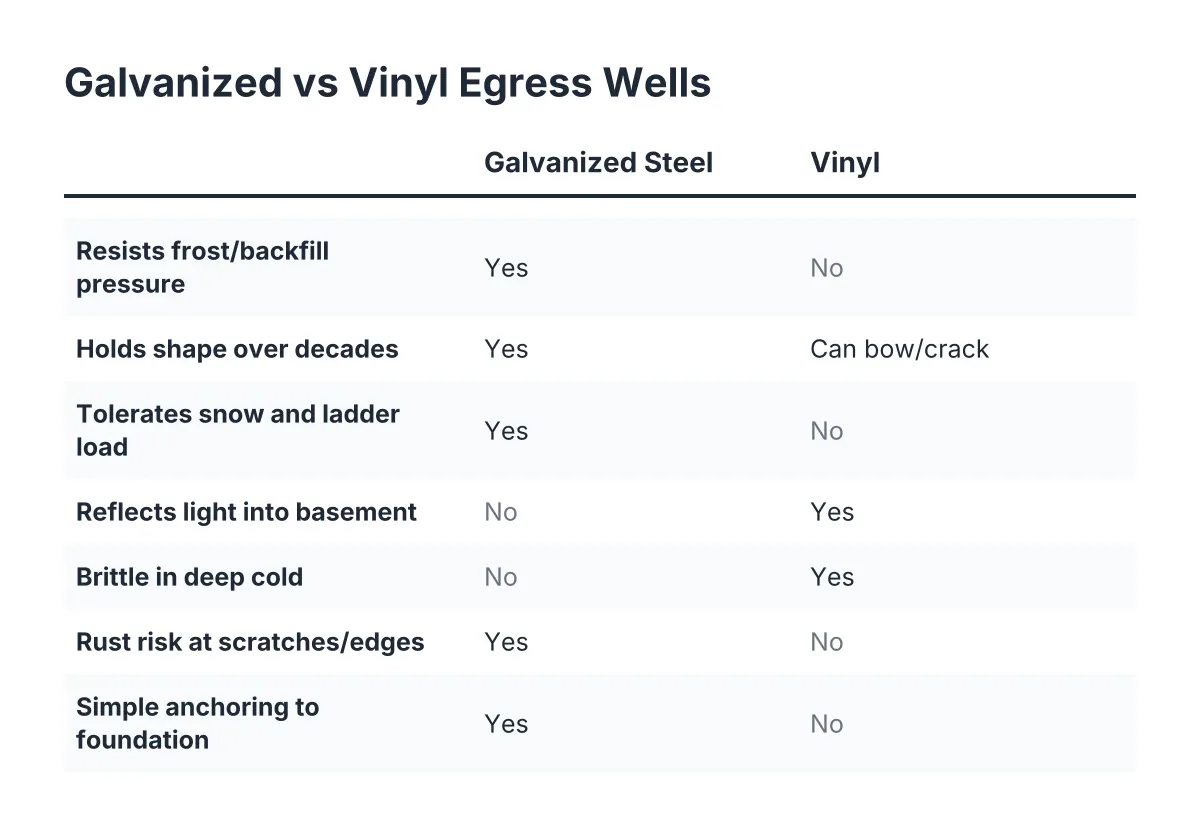
A basic vinyl casement window in a galvanized well is the workhorse setup, and it costs less than upgraded options. Larger windows, wood-clad or fiberglass frames, timber or composite wells, well covers, and ladders for deep wells all add to the total. Glass block is a separate conversation: block windows work well for light and security in non-bedroom spaces, but glass block does not satisfy the bedroom egress requirement, so it is not a substitute where code requires an escape route. Decide early whether this window is code-driven or comfort-driven, because that choice sets the spec.
Interior Finish Work
If the basement is already finished, someone has to open up drywall, framing, and possibly trim around the new window, then close it back up. Finished basement windows often cost more to install than the same window in an unfinished space for exactly this reason. Check what surrounds the future window location. Bare block or studs means simpler work. Finished drywall, built-ins, or a bedroom closet against that wall means more restoration, and you should ask each contractor whether interior finish repair is in their quote or left to you.
Drainage and Water Management
Minneapolis frost pushes deep, and a window well that does not drain becomes an aquarium against your foundation. Some homes need only proper grading and gravel at the base of the well. Others need a drain tied into existing drain tile or a longer gravel column. If your yard slopes toward the house or you have had water in the basement before, expect drainage work to be part of an honest quote. It costs more up front and far less than a flooded finished basement later.
Cost Factor Table
| Factor | Pushes the price down when… | Pushes it up when… |
|---|---|---|
| Opening | An existing window opening only needs enlarging | We cut a new opening through solid foundation wall |
| Foundation | The wall is standard block or poured concrete in good shape | The foundation is old, thick, or needs extra reinforcement |
| Site and soil | The dig spot is open lawn with easy access | Utilities, decks, sidewalks, or heavy clay are in the way |
| Window and well | You choose a standard vinyl window and galvanized well | You choose upgraded frames, deep wells, covers, or ladders |
| Interior finish | The basement wall is unfinished at the window location | Drywall, framing, and trim must be opened and restored |
| Drainage | The yard grades away and soil drains on its own | The well needs a drain tied into drain tile or added gravel |
How to Get an Accurate Basement Egress Window Installation Estimate
The fastest path to a real number is a site visit, or at minimum a detailed conversation with photos. Have this ready before you call any local installer:
- The purpose of the window. Bedroom egress, more light, or replacing a failing basement window. Code requirements change the spec.
- Your foundation type and home age. Poured, block, or stone, and roughly when the house was built.
- Photos of the wall, inside and out, including anything nearby outside like AC units, meters, or walkways.
- Any water history. Past seepage or flooding tells the installer what drainage work to plan for.
A good quote should spell out the window brand and size, the well material and depth, excavation and dirt haul-away, drainage plan, interior finish repair (included or excluded), permit handling, and cleanup. If a quote is one line with one number, you do not know what you are buying.
Estimates differ between providers for real reasons. One contractor may include a well cover and drain work while another leaves them out. A large regional outfit may price every job off the same sheet, while a local installer prices what your soil, frost depth, and foundation actually require. Compare quotes line by line, not total to total. We give basement egress window installation cost estimates as free quotes, so getting a real number for your Minneapolis home costs you nothing but a conversation.
Ways to Keep the Cost Down
You cannot skip code compliance, but you can control the total in legitimate ways.
- Use an existing opening when possible. If a current basement window can be enlarged instead of cutting fresh concrete, the installation price drops. Ask each bidder whether that is an option for your wall.
- Keep the spec simple. A standard-size window in a galvanized well meets code. Save upgraded wells, covers, and specialty frames for spaces where they earn their keep.
- Bundle windows in one visit. If two basement windows need replacement, doing them while the crew and equipment are already on site costs less per window than two separate projects.
- Get 2 to 3 detailed quotes. Not to grind the lowest bidder, but to spot what one estimate includes that another quietly leaves out. The cheapest total often excludes drainage or interior repair.
- Fix drainage and well problems early. A rusted well or poor grading left alone leads to water damage, and repairing a flooded finished basement costs far more than a window well installation done right the first time.
Cost Questions People Ask
Why can't anyone give me a price over the phone?
Because the two biggest cost drivers, your foundation wall and your dig site, are invisible over the phone. An installer who quotes blind either pads the number to protect themselves or lowballs it and surprises you with change orders later. Photos help narrow it down, but a site visit gets you a number you can hold someone to.
Does an egress window cost more in a finished basement?
Usually, yes. The window and excavation work are the same, but the crew has to open and restore drywall, framing, and trim around the new opening. Ask up front whether interior finish repair is included in the quote or left as your responsibility, because that difference alone can explain why two estimates for the same window disagree.
Is glass block a cheaper way to meet egress code?
No. Glass block is a good, lower-cost option for basement windows in laundry rooms, storage areas, and other spaces where you want light and security. But block windows do not open, so they cannot satisfy the bedroom egress requirement. If the room will be a bedroom, code requires a window a person can escape through.
Does the price include permits and inspection?
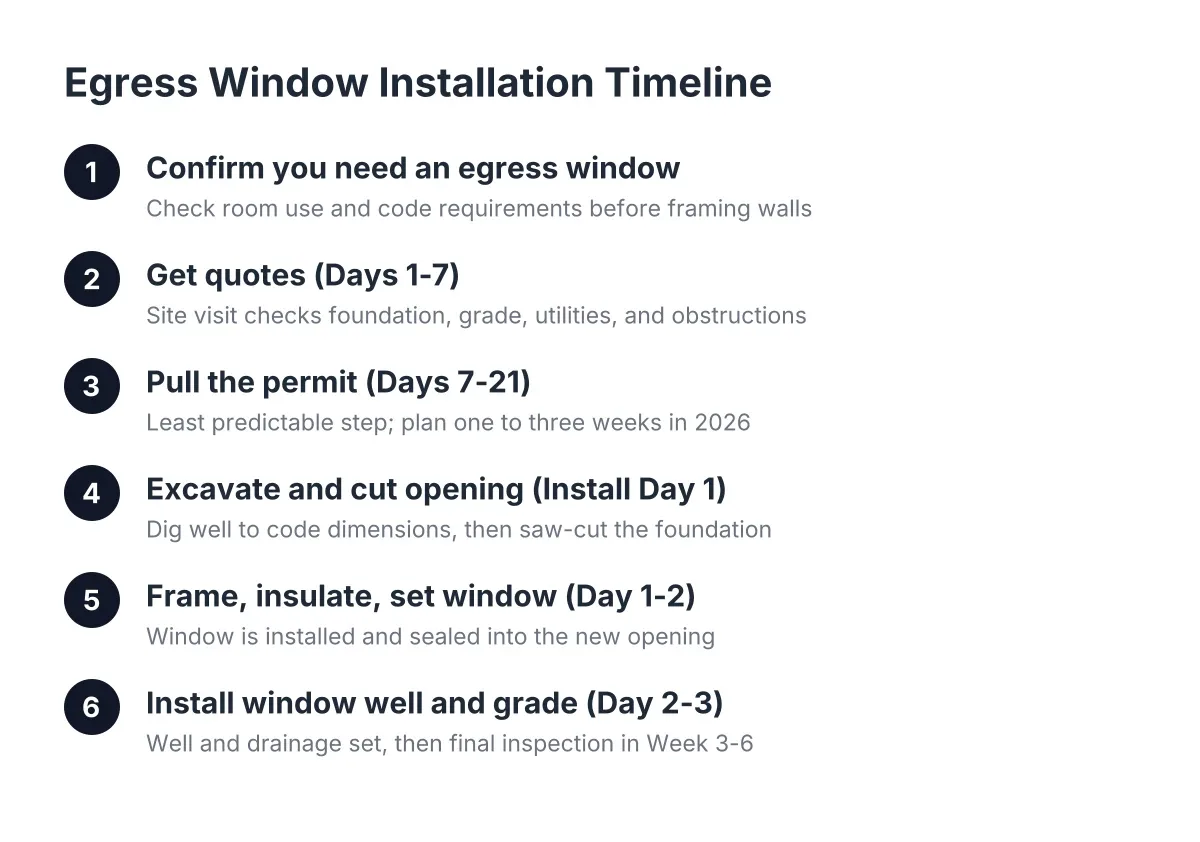
It should, and you should confirm it in writing. Egress work in Minneapolis needs a permit, and the inspection is what proves your bedroom is legal and your finished basement counts as living space when you sell. A quote that skips permitting is not a bargain; it is a problem you inherit.
The Bottom Line
The cost of a basement egress window comes down to what your foundation requires, what is in the ground outside, and the window and well you pick, which is why honest pricing starts with a look at your actual house. Gather two or three detailed quotes, compare what each one includes, and be suspicious of any number produced without seeing your basement. A free quote from a local installer who knows Minneapolis soil and frost is the fastest way from guessing to budgeting.
If you need basement egress window installation, Minneapolis Window Pros can help.
Prefer to talk it through? Call (612) 482-9787 — a quick call is usually the fastest way to get a straight answer for your situation.