Basement Window Blocks Terms Explained: A Plain-English Glossary
If you are getting quotes for basement window work in Minneapolis, the terms pile up fast: egress, window well, glass block, rough opening. This basement window blocks glossary explains each one in plain English so you can read a quote line by line and know what you are paying for. Use it to talk with any local installer on equal footing and to spot gaps in a bid before you sign. No sales talk, just the words and what they mean.
- Egress Window: a window big enough to escape through
- Glass Block Window: thick glass squares mortared together
- Block Window: shorthand for a glass block unit
- Window Well: the dug-out area outside the window
- Galvanized Window Well: a rust-resistant steel well liner
- Window Well Cover: a lid that keeps out rain and debris
- Bedroom Egress Requirement: the rule that sleeping rooms need an exit window
- Code Compliance: meeting local building rules
- Rough Opening: the framed hole the window fits into
- Sill: the bottom edge of the window opening
- Hopper Window: a small basement window that tilts inward
- Vent Block: a glass block unit with a built-in vent
- Cutting the Opening: enlarging the hole in the foundation wall
- Grading for Drainage: sloping soil so water runs away from the house
- Frost Depth: how deep the ground freezes in winter
- Free Quote: a written estimate at no cost
- Scope of Work: the list of exactly what the installer will do
Window Types and Materials in a Basement Window Blocks Glossary
These are the terms you will hear when an installer describes the window itself. This part of the basement window blocks glossary covers the products, from full egress units to glass block.
Egress Window
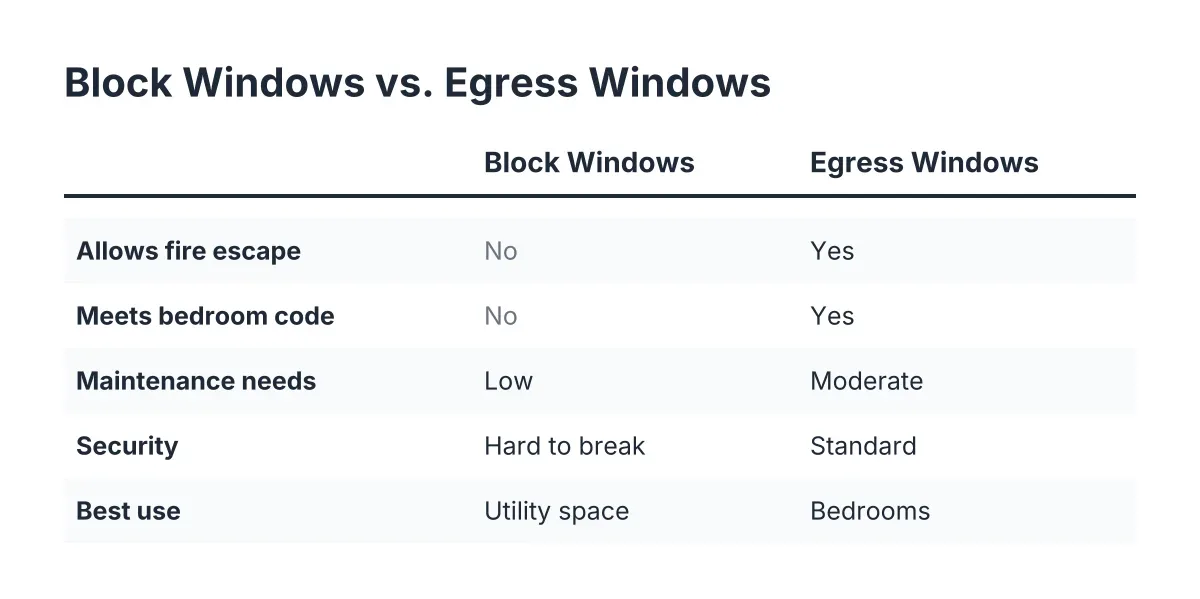
An egress window is a window large enough for a person to climb out of during an emergency, and for a firefighter to climb in through. Building codes require one in any basement bedroom and in most finished basement living spaces. If your basement has only small, high windows, adding an egress window usually means cutting a larger opening in the foundation and adding a window well outside. When an installer mentions egress, expect a bigger job than a simple swap: excavation, concrete cutting, and a well are usually part of it.
Glass Block Window
A glass block window is a fixed window built from thick, hollow glass squares mortared together like bricks. Glass block lets in light but blocks the view, which is why homeowners pick it for privacy and security in basements. Because the blocks are mortared into the opening, the window does not open unless a vent block is included. Glass block is a common choice for basement windows that do not need to serve as an escape route.
Block Window
A block window means the same thing as a glass block window; it is the shorthand installers and quotes often use. If a quote lists "block windows" and you expected an operable window, ask. Basement window blocks are fixed units, so they cannot satisfy the bedroom egress requirement on their own. Our guide comparing block windows and egress windows walks through when each one fits.
Hopper Window
A hopper window is a small basement window hinged at the bottom that tilts inward to open. It is the classic small basement window you see just above ground level. Hoppers ventilate well for their size, but most are too small to meet egress rules. If a provider suggests replacing an old hopper with glass block or a full egress unit, they are steering you based on how the room will be used.
Vent Block
A vent block is a glass block unit with a small built-in vent that opens for airflow. It solves the main drawback of block windows, which is that they do not open. If you want fresh air in a basement laundry room or workshop, ask whether the quote includes a vent block. It adds a little to the price of the window, but it is the only way a glass block window breathes.
Wells, Drainage, and the Outside of the Job
Half of a basement window project happens outside the wall. These terms cover the well, the soil, and the water.
Window Well
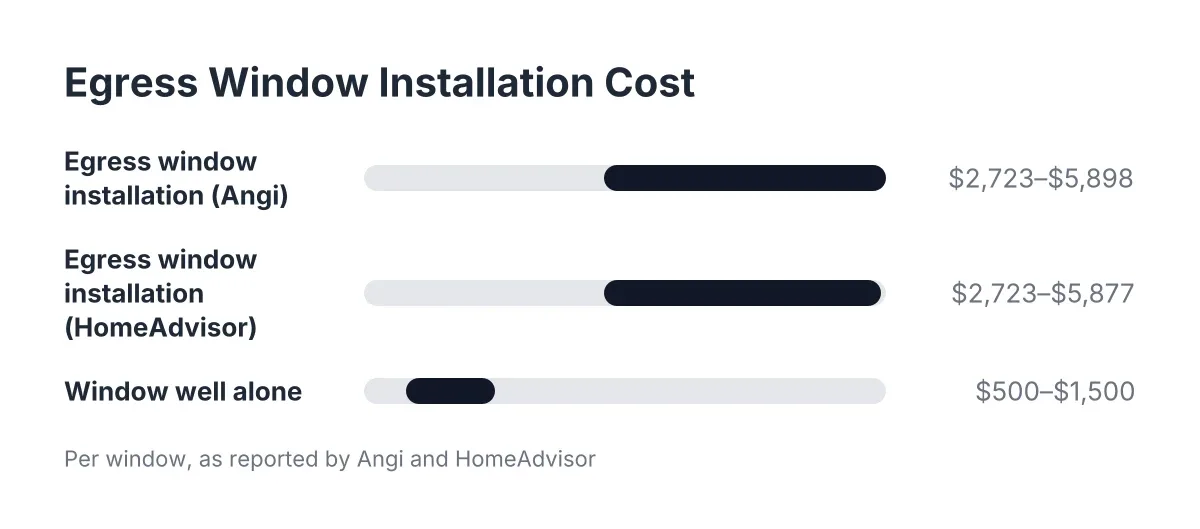
A window well is the dug-out, lined area outside a basement window that sits below ground level. It holds back the soil so the window can let in light and, for egress windows, gives you room to climb out. Wells come in different materials and sizes; egress wells must be large enough to stand in. If your quote includes window well installation, expect excavation as part of the work.
Galvanized Window Well
A galvanized window well is a well liner made from steel coated in zinc so it resists rust. Galvanized steel is a common well material in Minnesota because it handles wet soil and freeze-thaw cycles without rotting or cracking. It is the corrugated metal half-circle you have likely seen against foundations around Minneapolis. If your quote specifies galvanized, that tells you the material, not the size; confirm the well meets egress dimensions if the window is an escape route.
Window Well Cover
A window well cover is a clear or grated lid that sits over a window well to keep out rain, snow, leaves, and pets. Covers matter in Minnesota because a well full of snowmelt can leak into the basement. On an egress window, the cover must be removable from inside without tools, since the well is an escape route. Ask whether a cover is included in your quote or priced separately.
Grading for Drainage
Grading for drainage means sloping the soil around the window well so water runs away from the house instead of pooling against it. A well that collects water will eventually send it through the window. Good installers grade the backfill as part of the job, not as an extra. If a quote says nothing about drainage or grading, ask how they plan to keep water out of the well.
Frost Depth
Frost depth is how far down the ground freezes in winter. In Minnesota the frost line runs deep, and frozen soil expands and shifts, which can push on well liners and foundations. An installer who talks about frost depth is telling you they plan the excavation and backfill for local conditions, not a generic national spec. It is a fair question to ask any bidder: how do you account for frost here?
Process and Structure Terms in a Basement Window Blocks Guide
These words show up when the installer describes the actual work on your wall.
Cutting the Opening
Cutting the opening means saw-cutting the concrete or block foundation wall to make the hole larger for a new window. It is the loudest, dustiest part of an egress installation and one of the biggest labor items on the quote. Cutting must be done cleanly so the wall above stays supported. If your project involves enlarging a window rather than replacing one in the same hole, this step is why the labor cost is higher.
Rough Opening
A rough opening is the framed hole in the wall that the window unit fits into. It is cut and framed slightly larger than the window itself so the unit can be set level and sealed. If a quote mentions "modifying the rough opening," the installer plans to change the size of the hole, which means more labor than a same-size basement window replacement. Knowing this term helps you see whether two bids are describing the same amount of work.
Sill
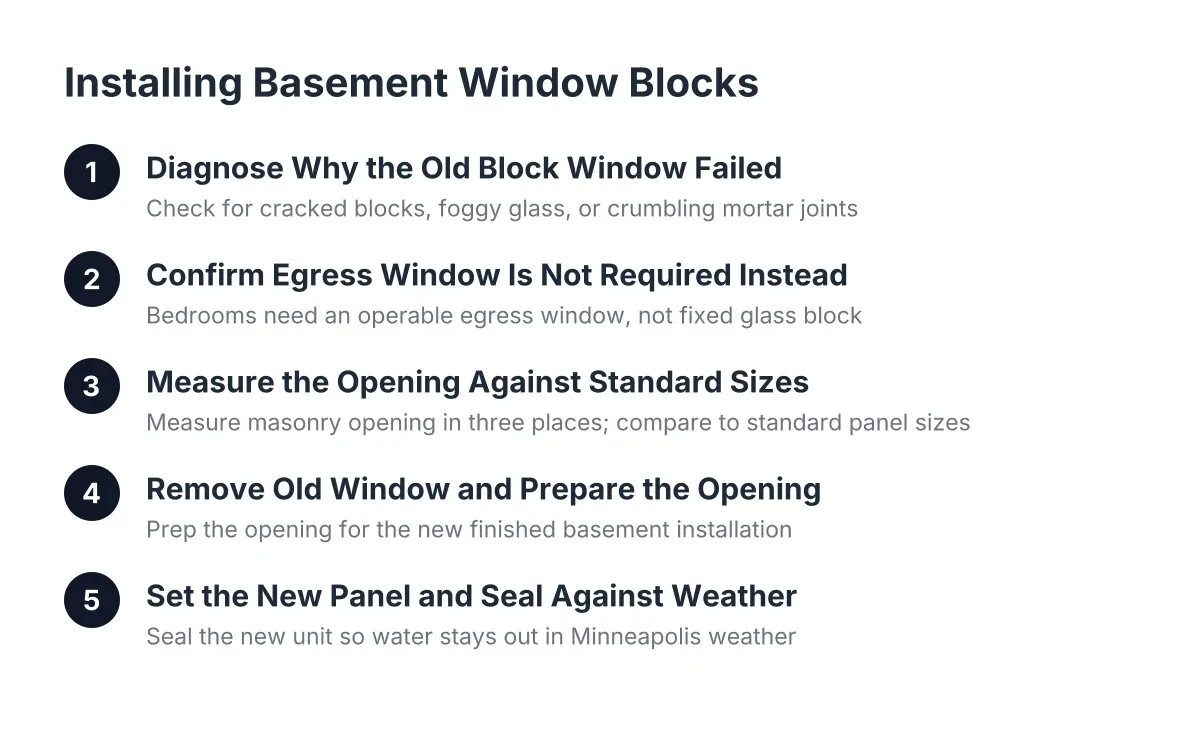
A sill is the bottom edge of the window opening, the surface the window sits on. In basements, the sill often sits close to grade, so it takes the most water exposure of any part of the window. A rotted or crumbling sill is a common reason old basement windows fail. If your installer flags sill damage, expect some repair work before the new window or glass block goes in.
Rules, Paperwork, and Pricing Language
Bedroom Egress Requirement
The bedroom egress requirement is the building code rule that every sleeping room must have an emergency exit, usually an egress window. It applies to basement bedrooms too, which is why finishing a basement into a bedroom almost always means adding or enlarging a window. Check your local code office for the exact dimensions that apply to your home. This rule is the single biggest driver of whether your project is a simple replacement or a full egress installation.
Code Compliance
Code compliance means the finished window meets your local building rules for size, height, and safety. For basement windows, that includes egress dimensions for bedrooms and living spaces in a finished basement. A code-compliant window protects you at inspection time and when you sell the house. Any installer working in Minneapolis should be able to explain, in plain terms, how the window they are quoting meets code.
Free Quote
A free quote is a written estimate you get at no cost and with no obligation to hire. For basement window work, a useful quote lists the window type, the well, the excavation, and the cleanup as separate lines, not one lump sum. Pricing varies by project, so a real quote requires someone to look at your foundation, your soil, and your existing openings. A local installer should offer this without a hard sell.
Scope of Work
A scope of work is the written list of exactly what the installer will do, from cutting the opening to hauling away debris. It is the part of the quote that prevents arguments later. Compare scopes, not just totals: a cheaper bid that skips grading, a well cover, or interior finishing is not the same job. If something you discussed is not in the scope, it is not in the price.
Using These Terms
With this basement window blocks glossary in hand, you can read any quote line by line and know whether it covers the window, the well, the drainage, and the code details your project needs. You can also ask sharper questions: does the price include a cover, who handles grading, and does the window meet the bedroom egress requirement? When you are ready, a free quote from a local installer will tell you how these terms apply to your own basement.
If you need basement egress window installation, Minneapolis Window Pros can help.
Prefer to talk it through? Call (612) 482-9787 — a quick call is usually the fastest way to get a straight answer for your situation.