Basement Window Leaking in the Corner? What It Means and How to Fix It Fast
Water running in at one corner of a basement window is a specific clue, not a mystery. A basement window leaking at the corner usually means one of three things: a failed seal where the frame meets the foundation, a window well that fills faster than it drains, or water tracking down the wall from above. This guide walks you through finding which one you have, stopping the water today, and figuring out whether you are looking at a tube of sealant or a replacement window. For homeowners in Minneapolis, MN, with older block foundations and deep frost, corner leaks are one of the most common basement complaints after a heavy rain.
Here is the short version for the panicked reader. If water only shows up at the corner during rain and the well outside is full, your problem is drainage and might cost you a weekend and some gravel. If the corner leaks even in light rain, or the frame is soft and rotted, the window itself has failed and you are into replacement territory. Read on for how to tell the difference.
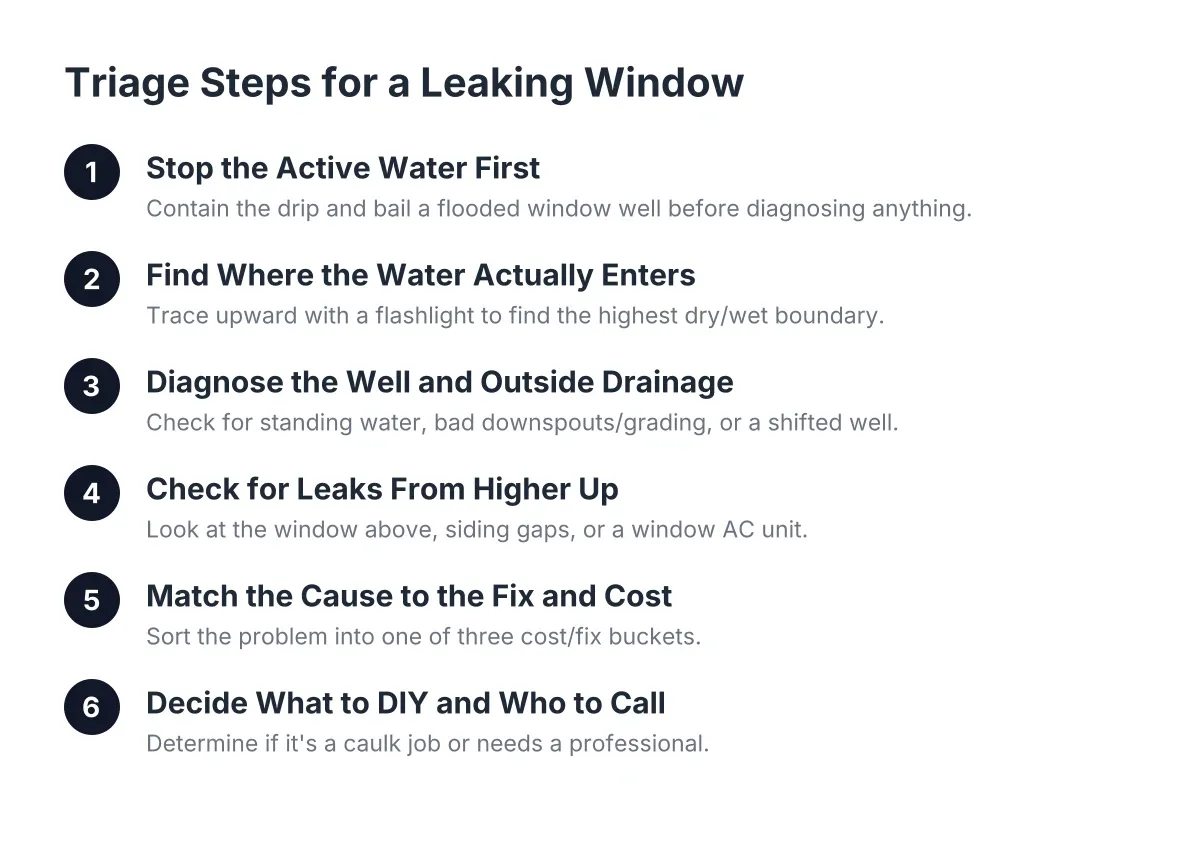
Step 1: Stop the Active Water First
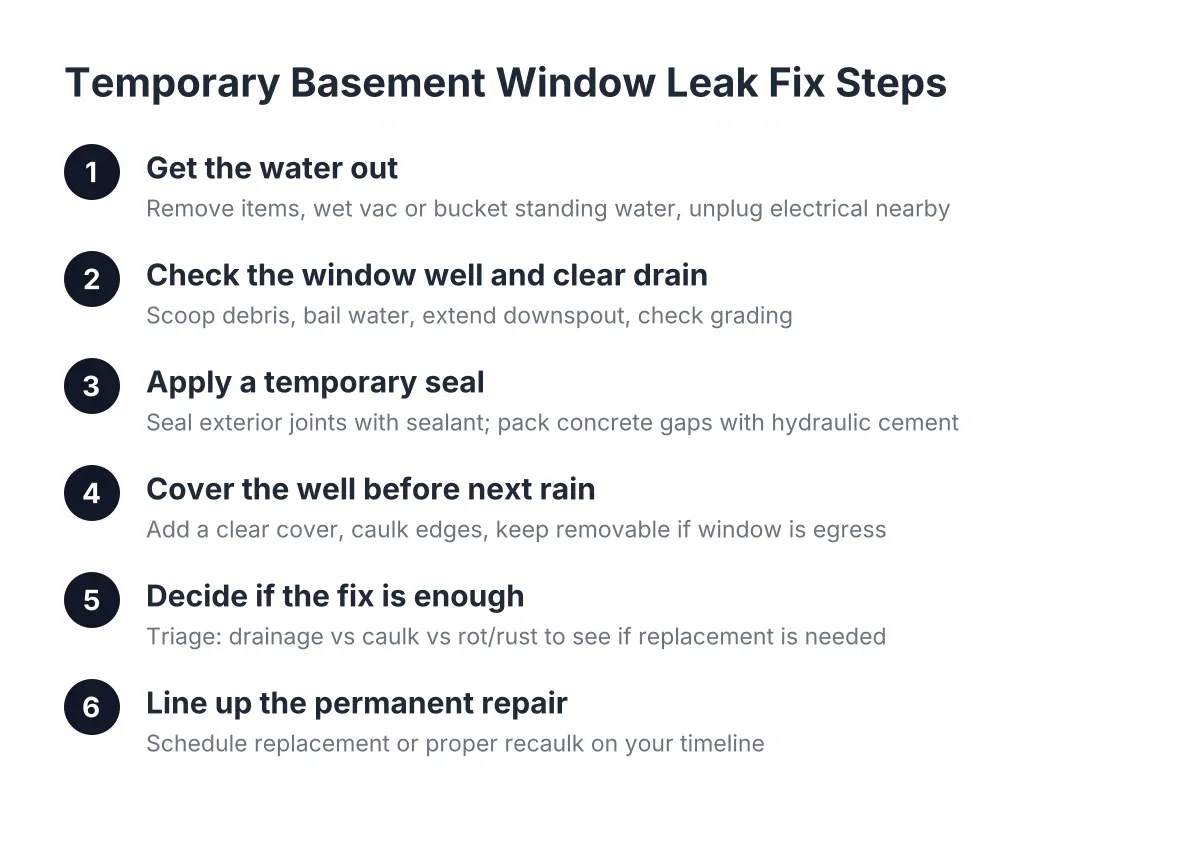
Before diagnosis, control the damage. Water coming in a basement window fast will keep coming until the source drains, so buy yourself time.
- Move anything stored near the window away from the wall.
- Put a towel roll or a shallow pan under the leaking corner to catch drips.
- If the window well outside is holding water, bail it out with a bucket or a small pump.
- Lay a tarp over the well, weighted with bricks, to shed the rest of the storm.
These moves take ten minutes and can save you a soaked carpet in a finished basement. Once the rain stops and the well drains, you can diagnose in daylight.
Step 2: Figure Out Why the Window Is Leaking at the Corner
A basement window leaking in one corner tells you where the weakest joint is. Corners are where the frame, the sill, and the foundation all meet, so any failure in that junction shows up there first.
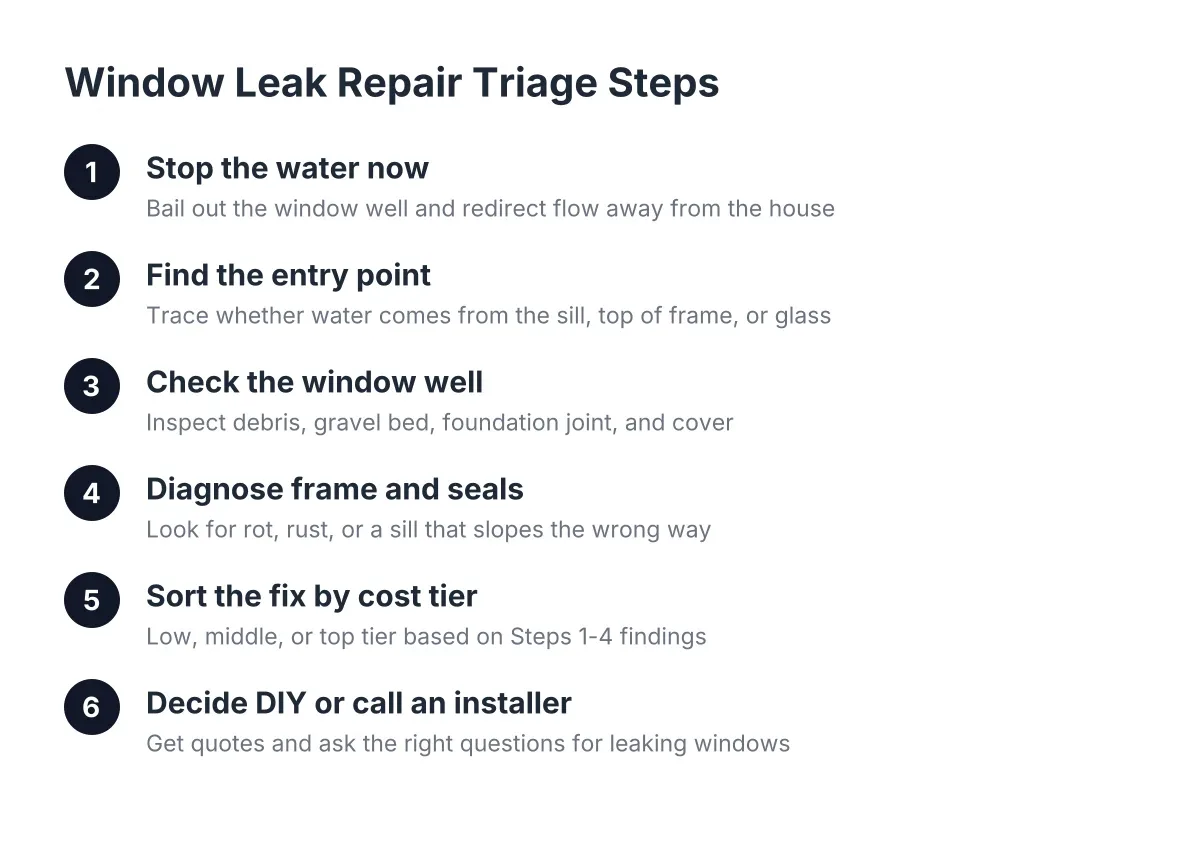
Check these in order:
- Look at the window well. If the well floods during rain, water sits against the glass and frame. Any gap at the corner becomes an entry point. This is the most common cause in Minneapolis, MN, where clay-heavy soil drains slowly.
- Inspect the caulk line at the corner. Run a finger along the joint where the frame meets the concrete or block. Cracked, pulled-away, or missing sealant at the corner is a seal failure, and it is the cheapest fix on this list.
- Check the sill slope. The bottom board or sill should tilt slightly outward so water drains away from the opening. If it slopes inward, or sits dead level, water pools and finds the corner joint.
- Look above the window. Water staining that starts above the frame and runs down to the corner means the leak is higher up: a gap in siding, a disconnected downspout, or grading that sends roof water at the wall.
- Press on the frame itself. Soft wood, rust-through on a steel frame, or fogged and cracked glass block means the window assembly has failed, not just the seal around it.
Spend 15 minutes on this checklist. It tells you which of the next steps applies to your house.
Why Rain Makes Window Leaking at the Corner Worse
Basement window leaking after rain is almost always a volume problem. The joint at the corner may hold back damp soil fine for years, then fail the first time the well fills with four inches of standing water. Hydrostatic pressure pushes water through gaps it would never pass through by gravity alone. That is why the fix is often outside the window, not at the window.
Step 3: Fix a Flooding Window Well Before You Touch the Window
If your well floods, fix that first. Resealing a corner while the well still fills is treating the symptom.
Start with the simple stuff. Pull leaves, mulch, and debris out of the well. Check that the gravel at the bottom is loose, not packed with silt; if it is, dig out the top few inches and replace it with clean drainage rock. Make sure downspouts discharge at least several feet away from the well, and confirm the ground slopes away from the house.
In addition, a window well cover earns its keep here. A clear cover over the opening, with a bead of caulk around its edge, keeps rain and snowmelt out of the well entirely. For a Minneapolis winter, it also keeps the well from filling with snow that melts against the window in March.
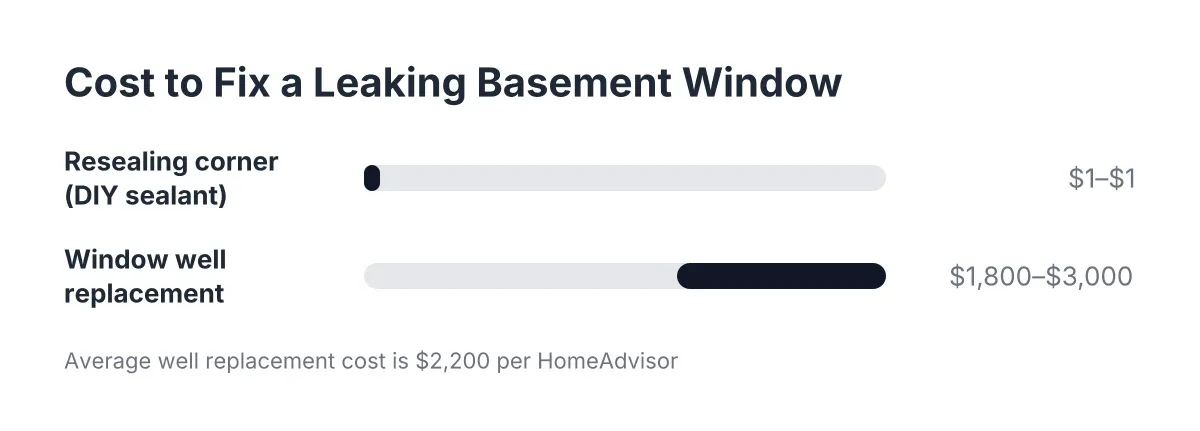
The limitation: if the well itself has pulled away from the foundation, or there is no drain under it at all, cleaning gravel will not save you. A well that is separating from the house needs to be reset and sealed to the foundation with a continuous bead of polyurethane sealant. That is a dig-and-reset job. According to HomeAdvisor, window well replacement costs an average of $2,200, with most homeowners spending between $1,800 and $3,000.
Step 4: Reseal the Corner if the Window Is Still Sound
Suppose the well drains fine and the frame is solid, but the caulk at the corner is cracked. This is the DIY-friendly outcome, and it is a genuine weekend job.
- Scrape out all the old, failed sealant at the corner and along the sides. Partial removal gives you a partial seal.
- Clean the joint and let it dry fully. Sealant over damp concrete fails early.
- Apply a high-quality exterior window and door sealant along the sides and top of the frame where it meets the masonry.
- Do not caulk the bottom edge of the sill shut. Water that gets behind the window needs an escape route; sealing the bottom traps it against the frame.
That last point is the one DIY videos skip, and it is the difference between a repair that lasts and a corner that leaks again next spring, this time with rot behind it. Material cost for this fix is modest; think a couple of tubes of sealant and an afternoon.
When a Window Leaking at the Corner Means the Seal Has Failed Inside the Unit
Fog or moisture between panes is a different problem. That is basement window seal failure inside the glass unit, and no amount of caulk fixes it. On glass block windows, cracked or foggy blocks mean the mortar joints or the blocks themselves are compromised. At that point you are comparing repair against basement window replacement, and replacement usually wins on older units.
Step 5: Decide Between DIY Repair and Replacement
Here is the honest triage, since this is the decision most homeowners searching for window repair near me are actually trying to make.
DIY makes sense when: the frame is solid, the well drains, and the only failure is the exterior caulk joint. Cost is sealant and time.
Replacement makes sense when: the frame is rotted or rusted, the glass unit has failed, the window is a 60-year-old steel unit in a pre-1990 Minneapolis house, or basement window leaks keep returning after repeated resealing. A proper full-frame replacement fixes the corner problem for good, because the installer sets the new unit level and plumb, slopes the sill outward, and seals every seam between frame and masonry. Alignment matters more than brand here; a window installed out of level will leak at a corner no matter what it cost.
There is also a middle case worth knowing about. If you are planning to finish the basement, 2026 code compliance may force your hand anyway. Minneapolis code requires each bedroom below the fourth floor to have a window at least 20 inches wide by 24 inches high, with nothing blocking it, according to the City of Minneapolis. If your leaky old unit is in a future bedroom, putting money into repairing it rarely makes sense when an egress window is required regardless. For budgeting, HomeAdvisor reports installing an egress window costs an average of $4,229, with most homeowners spending between $2,723 and $5,877. Angi puts an egress window with a well at about $3,900 on average.
A Realistic Scenario for Comparing Costs
Say a homeowner in south Minneapolis finds the northeast basement window leaking at the corner after every thunderstorm. The well is half full of silted gravel, and the caulk line is cracked. In that scenario, cleaning the well, adding a cover, and resealing the frame might run under $200 in materials. However, if the same inspection finds a rusted steel frame and fogged block windows, a basement window replacement is the right call, and pricing varies by opening size and whether concrete needs cutting. A local installer who works on basement and egress windows can measure the opening and give you a free quote, which is the fastest way to know which side of that line you are on.
Step 6: Prevent the Next Corner Leak
Once the water stops, a short maintenance habit keeps it stopped. Each spring and fall, check the well for debris, confirm the gravel drains, recheck the caulk lines at the frame corners, and watch where your downspouts discharge. In Minneapolis, also clear snow away from well covers before the first big melt.
One more honest note: if water is coming through the foundation wall itself, not the window joint, you have a waterproofing problem, and a window pro is not the right first call. Cracks in the block or poured wall below the window deserve a foundation or waterproofing contractor's eyes before anyone installs a new window above them.
A corner leak is specific, which makes it solvable. Find out whether the water is winning outside the window, at the seal, or inside the unit. Then match the fix to the failure, not the other way around.
If you need basement egress window installation, Minneapolis Window Pros can help.
Prefer to talk it through? Call (612) 482-9787 — a quick call is usually the fastest way to get a straight answer for your situation.