Window Replacement Process Timeline: From Quote to Finished Install
If your inspector flagged the basement windows and your closing date is already on the calendar, the first question is not just cost. It is time. This guide walks through the window replacement timeline process step by step, from the first quote request to the day the crew sweeps up and leaves. Most of the clock is not installation day. It is measuring, ordering, and waiting for custom windows to arrive. Know where the time goes and you can plan around a hard closing date instead of hoping it works out.
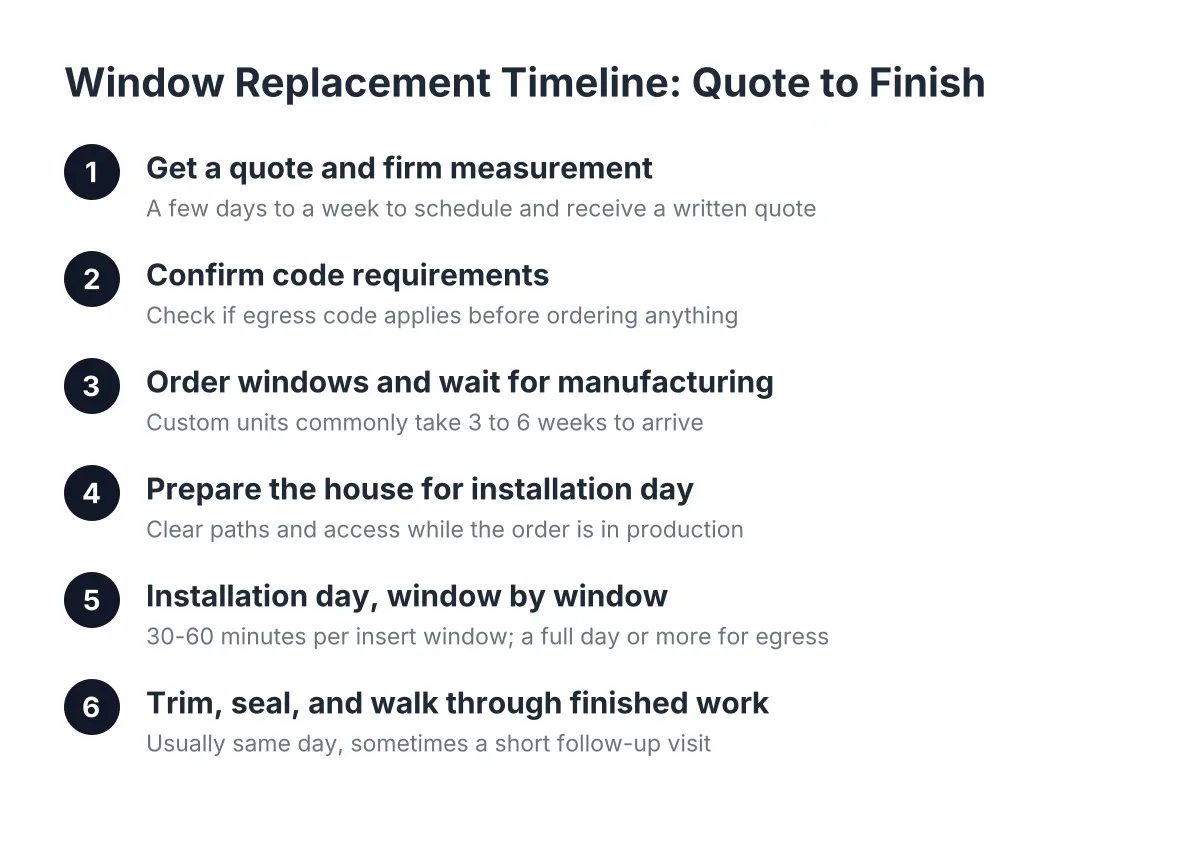
Here is the short version for a typical Minneapolis project in 2026:
- Quote and measurement: a few days to a week to get on the schedule
- Window ordering and manufacturing: often 3 to 6 weeks for custom-sized units
- Installation day: 30 to 60 minutes per window for insert replacements; a full day or more for a new egress window with a window well
- Final sealing, trim, and cleanup: usually same day, sometimes a short follow-up visit
Now the detail, step by step.
Step 1: Get a Quote and a Firm Measurement
Start by getting a quote based on real measurements, not a phone estimate. A window installer should look at each opening, check the frame condition, and tell you whether an insert replacement will work or whether the opening needs a full-frame replacement. Those are different jobs with different timelines, and a quote that skips this step is a guess.
For a pre-sale fix, bring the inspection report to this visit. If the inspector wrote "basement window does not meet bedroom egress requirement," that is a different project than "cracked glass in basement window." The first means cutting the foundation and installing an egress window and window well. The second might be a simple basement window replacement you can finish in a week.
Ask for the quote in writing with the scope spelled out. If a buyer's attorney sends a repair addendum, a documented quote with specific work listed is what keeps the negotiation from drifting. Pricing varies by project, so get the number tied to your actual openings, not a generic figure.
How Long This Step Takes in Your Window Replacement Timeline
Plan on a few days to a week to schedule the measurement visit, and the written quote shortly after. If you are racing a closing date, say so up front. A local installer can often tell you on the spot whether your timeline is realistic.
Step 2: Confirm What Code Requires Before You Order
Do not order windows until you know whether code compliance is part of the job. In Minneapolis, a basement room used as a bedroom needs an egress window that a person can climb out of. According to HomeAdvisor, IRC egress code calls for a minimum net clear opening of 5.7 square feet, with a window well that projects at least 36 inches from the house and has a nine square foot footprint.
This matters for your timeline because an egress project involves excavation, concrete cutting, and often a permit. A straight swap of an existing basement window usually does not. If the buyer's inspector only flagged a failed seal or rotted frame, you may not need the bigger project at all. Get a straight answer on this before anything gets ordered, because it changes both the cost and the schedule by weeks.
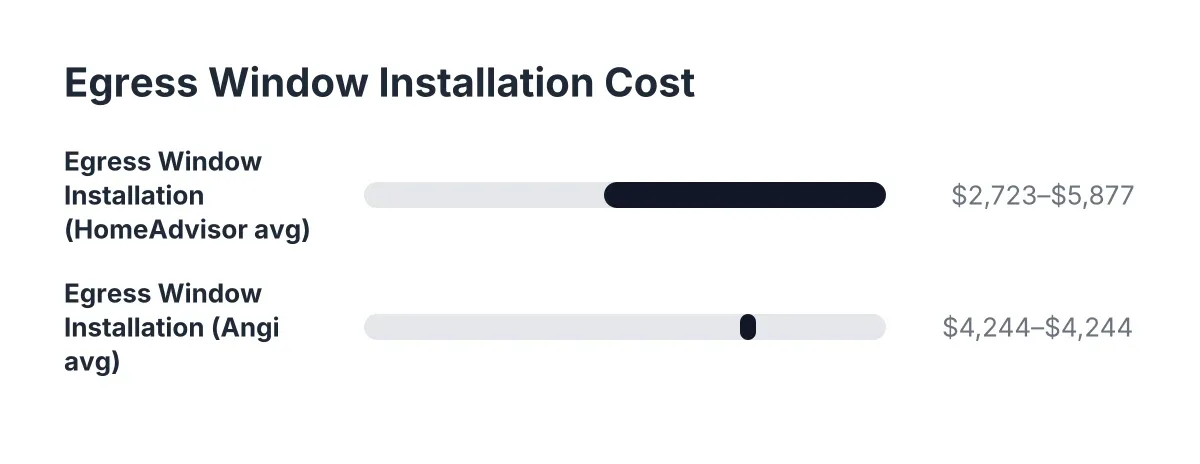
Suppose a homeowner in South Minneapolis is selling a 1950s rambler with a finished basement bedroom. The inspection flags the basement window as too small for egress. In that scenario, the fix is a full egress window installation with a new window well, not a glass swap. For reference, Angi reports egress window installation averages $4,244 nationwide, with most homeowners spending between $2,723 and $5,898 per window. Your actual quote will depend on your foundation, soil, and well style.
Step 3: Order the Windows and Wait Out the Manufacturing Stage
Ordering is where most of the window replacement timeline actually lives. Custom-sized replacement windows are built to your measured openings, and manufacturing plus delivery commonly runs 3 to 6 weeks. Stock windows from a home improvement store arrive faster, but basement openings in older Minneapolis homes rarely match stock sizes. Concrete openings leave little room for adjustment, so a custom window sized to the opening usually installs cleaner and seals better.
Therefore, if your closing is five weeks out, this is the step that decides whether you make it. A few ways to protect the date:
- Order the same day you approve the quote; every day before the order is dead time
- Ask for the manufacturer's current lead time in writing, since lead times shift through the year
- Ask whether a glass block window or block windows could solve a non-egress opening faster, since glass block can sometimes be built and installed on a shorter schedule
- If egress work needs a permit, ask who pulls it and how long the city typically takes
One caution from the installer side: do not unbox or test-fit a window before its opening is fully opened up and verified. Once a window is out of its packaging, retailers generally will not take it back, even if the size is wrong. A professional crew handles this sequencing for you, which is one reason the hire-it-out route is safer on a tight deadline.
Step 4: Prepare the House for Installation Day
While you wait on the order, get the house ready. This step costs nothing and keeps installation day on schedule. Clear a working path to each window, inside and out. Take down curtains, blinds, and anything hanging near the openings. Move furniture at least a few feet back so the crew can pull old units without working around your couch.
For basement work, there is more to do. If the project includes an egress window well, the crew needs machine or shovel access to that side of the foundation. Move grills, planters, and anything along the wall. Inside a finished basement, pull items off shelves near the window and cover nearby furniture, since cutting concrete makes dust no matter how carefully the crew contains it.
In addition, plan for the weather. Window replacement happens year-round in Minnesota, and crews replace windows one at a time so the house is never standing open. Winter installs work fine; frost depth matters more for digging an egress well than for swapping an upstairs double-hung.
Step 5: Installation Day, Window by Window
Installation day moves faster than most homeowners expect. For an insert replacement, the crew pulls the old sashes and hardware, removes the old unit, checks the frame, and sets the new window. A typical crew places the window, then uses a level to confirm it sits plumb and level, adjusting shims until the frame is square. A window that is not square will not open and close right, so this check is not optional.
Next comes sealing. The gap around the frame gets insulated, often with low-expansion foam, and the exterior gets flashed and caulked. Standard practice tapes the side flanges first, then the top, and leaves the bottom path open so any water that sneaks behind the window can drain out instead of sitting in the wall. On many units, a removable cap at the top gets sealed with caulk to close the gap above the frame.
As a working estimate, an insert replacement runs 30 to 60 minutes per window once the crew is set up. A full-frame replacement takes longer because the entire old frame comes out. A new egress window with excavation, concrete cutting, and well installation is typically a full day, sometimes two if the dig is complicated.
What the Egress Installation Adds to Your Window Replacement Timeline
An egress project adds excavation and concrete work ahead of the window itself. The crew digs out the well area, cuts the foundation opening to size, sets and seals the window, then installs the window well, often a galvanized steel well in Minneapolis, and backfills with drainage gravel. According to HomeAdvisor, window well replacement on its own averages $2,200, which gives you a sense of how much of an egress project is the well and dig rather than the window.
Step 6: Trim, Seal, and Walk Through the Finished Work
The job is not done when the window is in. Interior trim, interior sealing, and exterior caulk finish the work and protect it through a Minnesota winter. In a finished basement, expect the crew to trim out the opening so it looks like part of the room. In an unfinished basement where you only replaced a broken window before listing, the trim-out can be skipped once the window is insulated and sealed, which saves time and money on a pre-sale fix.
Before the crew leaves, walk the job with them. Open and close every window. Check locks and screens. Look at the exterior caulk lines. Then collect your paperwork: the final invoice, the product and labor warranty terms, and any permit sign-off for egress work. For a home sale, that paper trail is the point. It shows the buyer the inspection item was resolved by a professional, which closes the issue instead of reopening the price conversation.
How Long the Full Window Replacement Timeline Runs
From signed quote to finished install, a straightforward project with replacement windows in Minneapolis usually runs 4 to 8 weeks, with most of that being manufacturing lead time. Installation itself is a day for most whole-house jobs and a day or two for an egress window with a well. A single basement window replacement can wrap up faster if the size is common or a glass block unit fits the need.
However, the timeline stretches when permits, custom sizes, or foundation surprises enter the picture. If your foundation shows cracking near the opening, or water has been getting in around an old window well, bring in a professional to assess it before the window order goes in. A window set into a failing opening is wasted money, and no sealed frame fixes a drainage problem.
The practical takeaway for a seller on a deadline: start the window replacement timeline the week the inspection report lands. The measurement visit and the order are the two steps you control. Everything after that is the manufacturer's clock and the crew's calendar, and both run smoother when you started early with a clear, written scope.
If you need basement egress window installation, Minneapolis Window Pros can help.
Prefer to talk it through? Call (612) 482-9787 — a quick call is usually the fastest way to get a straight answer for your situation.