Egress Window Cost Budget: Vinyl Wells vs. Galvanized Steel in Minneapolis
If you are planning an egress window cost budget for a Minneapolis basement, the window well material is one of the first choices that moves the number up or down. Vinyl (plastic composite) wells and galvanized steel wells both pass code when sized right, but they behave differently in our clay soil, our frost depth, and our freeze-thaw cycles. This guide walks through the comparison of vinyl vs steel wells, what each option costs relative to the other, what drives the total price of the project, and where a handy homeowner can realistically save money without risking a wet basement later.
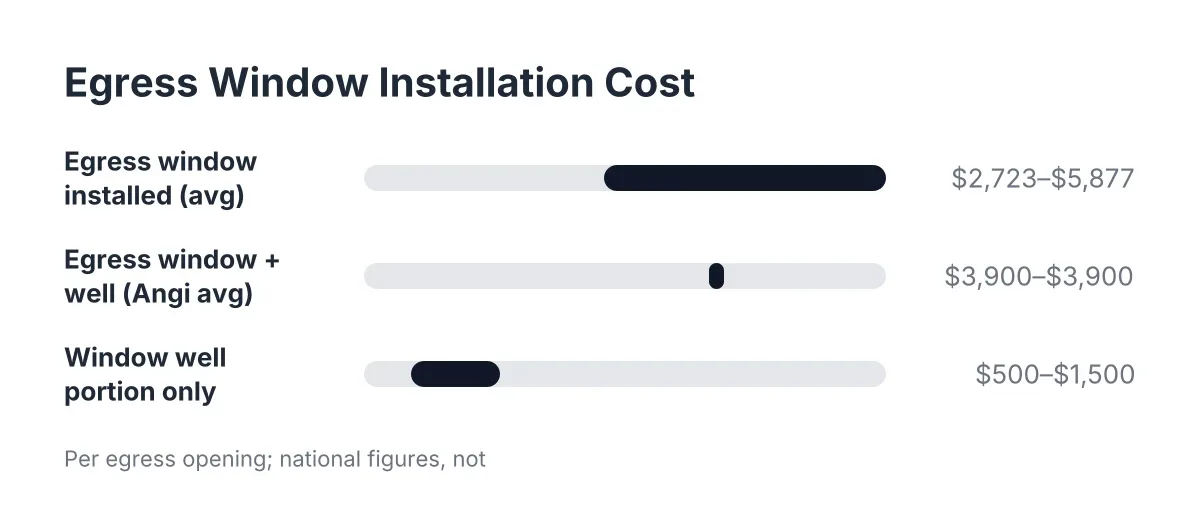
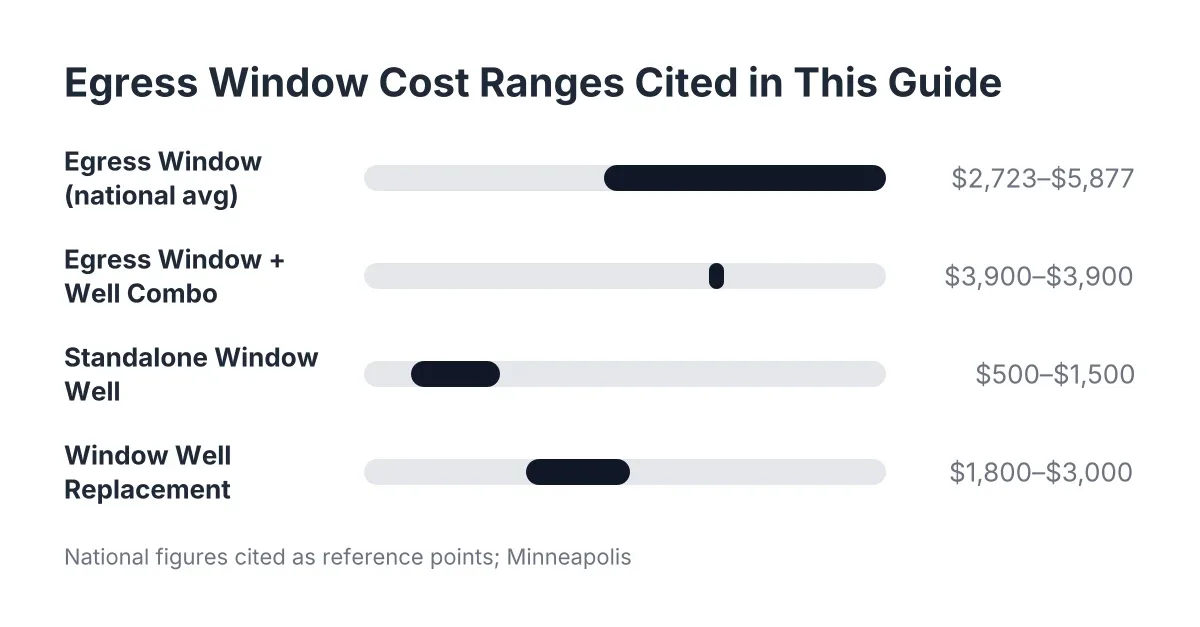
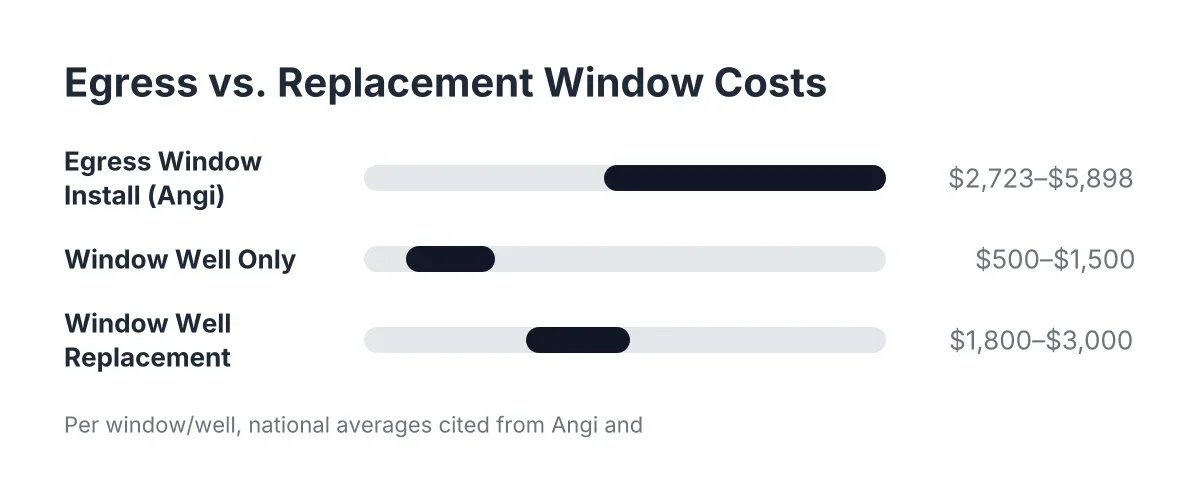
One note before the numbers. National averages are a starting point, not a quote. Installing an egress window costs an average of $4,229, with most homeowners spending between $2,723 and $5,877, according to HomeAdvisor. That range covers the whole country. Minneapolis jobs often land differently because of how deep we dig and what we hit on the way down. More on that below.
Why the Window Well Drives Your Egress Window Budget
The window well is the part of this project most homeowners underestimate. The window itself is a known cost. Additionally, the well is where soil, drainage, and material choice stack up.
A code-compliant egress well is not a small bucket against the foundation. IRC egress code requires a well that projects at least 36 inches from the house with a nine square foot footprint, and the window needs a minimum net clear opening of 5.7 square feet, according to HomeAdvisor. In Minneapolis, the well also has to sit below your window sill, and your sill is often deep because our basements are deep. A deeper well means more excavation, more well material, and more backfill. That is why well choice matters more here than it does in a shallow-frost market like Tennessee.
For context on the well as its own line item: installing a window well costs anywhere from $500 to $1,500 or more, and adding an egress window and well together runs about $3,900 on average, according to Angi. If you are only swapping a failed well, window well replacement costs an average of $2,200, with most homeowners spending between $1,800 and $3,000, according to HomeAdvisor. Those are national figures, but they show the pattern: the well and the digging are a large share of the total, not an accessory.
Vinyl vs Steel Wells: Core Trade-Offs and Performance
Both materials can meet code compliance. The decision comes down to cost, depth, looks, and how each one handles Minneapolis ground.
Vinyl and composite wells: the budget-friendly starting point
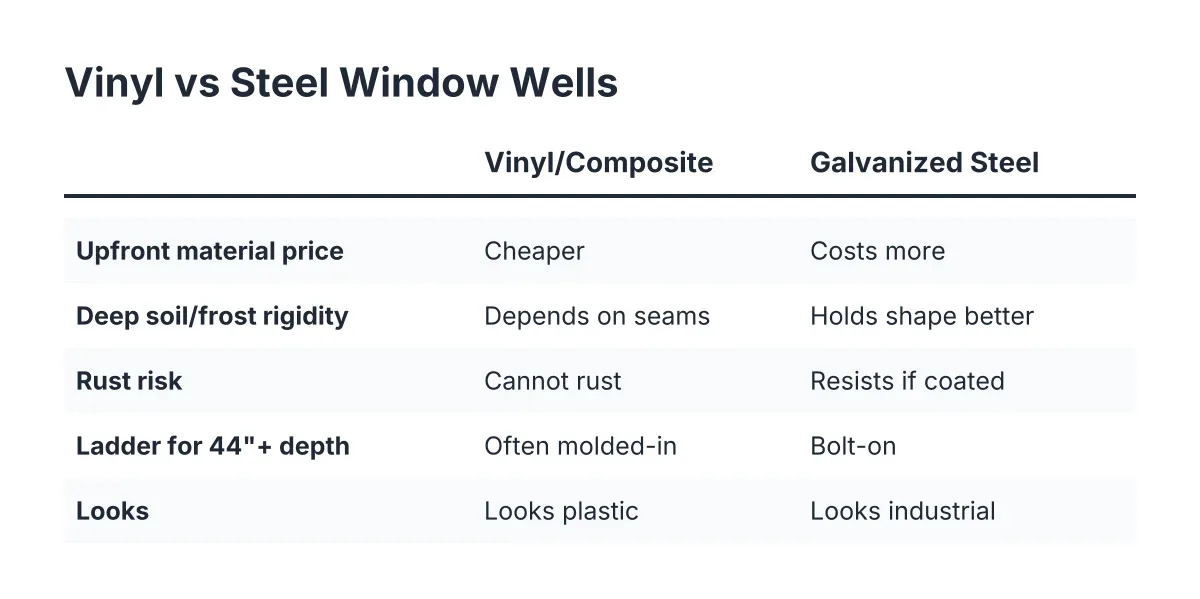
Vinyl and plastic composite wells are usually the lower-cost option at the materials level, and they are the ones you will see stacked at the big box store. They come in modular sections that stack to reach depth, they will not rust, and many have molded-in steps that double as the code-required ladder for wells deeper than 44 inches.
The trade-offs show up in deep installs. Stacked plastic sections rely on connections between tiers, and every connection is a place where soil pressure can work on the well over years of frost heave. Minneapolis frost pushes on anything buried in the top several feet of soil. A shallow vinyl well in sandy soil handles that fine. A six-foot-deep vinyl well in heavy clay asks more of those seams. Vinyl also tends to look like what it is, which matters if the well faces the side of the house your neighbors see, and it matters if you plan to sell soon.
Galvanized steel wells: more cost up front, more rigidity in deep soil
Galvanized egress window wells are formed from corrugated steel, usually in one continuous piece per tier or as a single deep unit. Steel resists soil pressure better than plastic, which is why installers in frost markets often default to it for deep wells. The galvanized coating is what keeps it from rusting; a quality well should outlast the window.
The cost difference is mostly in the material itself and sometimes in handling, since a deep steel well is heavy and awkward in a tight side yard. Steel wells also accept bolt-on ladders and covers sized to the corrugation, so the accessory ecosystem is broad. The honest downside is appearance. Bare corrugated steel reads industrial. Some homeowners dress the inside with stone or a faux-rock liner, which adds cost back in.
A quick comparison
- Material price: vinyl is typically the cheaper well; galvanized steel costs more up front.
- Depth performance: steel holds its shape better under deep frost and clay pressure; stacked vinyl depends on its seams.
- Rust and rot: vinyl cannot rust; galvanized steel resists rust as long as the coating stays intact.
- Ladder requirement: wells deeper than 44 inches need a permanent ladder or steps; many vinyl wells mold them in, steel wells use bolt-ons.
- Looks: vinyl looks plastic, steel looks industrial; both can be dressed up for added cost.
- Resale read: a rigid, clean, covered well of either material reads fine to an inspector; a bowed or separated well of either material reads as a problem.
Neither material is the wrong answer. Suppose a homeowner in South Minneapolis has a 1950s rambler with a sill only three feet below grade. A vinyl well is likely the sensible budget pick there. Now suppose the same homeowner has a 1920s house in Northeast with a deep basement and a sill five and a half feet down. In that scenario, most local installers would steer toward galvanized steel, because the extra rigidity is worth more than the savings on plastic.
What Else Shapes an Egress Window Cost Budget in Minneapolis
The well material is one lever. Four others move the total at least as much, and a realistic egress window cost budget accounts for all of them before you collect quotes.
Excavation depth and soil
Minneapolis code and climate push excavation deeper than national articles assume. The dig has to get below the window sill plus room for a gravel drainage base, and the frost line here runs deep. Crews dig deeper rather than wider; the foundation hole for the window itself is usually cut down, not out, because most basement windows need more height to hit the 5.7 square foot clear opening. Heavy clay digs slower than sand. Buried concrete from an old stoop or an abandoned fuel oil line slows it further. Every extra foot of depth adds digging, well material, and backfill.
Cutting the foundation
Cutting poured concrete or block is specialty work with specialty tools. The price depends on wall thickness, whether the wall is block or poured, and how much the opening has to grow. Enlarging an existing basement window opening costs less than cutting a new opening in blank wall, since part of the hole already exists.
The window itself
A basic vinyl egress unit costs less than an upgraded one, same as anywhere in the house. Horizontal sliding windows are a common egress pick because the full sash slides out of the way and the clear opening is easy to verify. Casements are the other frequent choice, since the entire sash swings clear. One caution from the field: an outswing unit can be blocked by the well itself if the well is tight, which is a measurement problem, not a product problem, and a reason to size the well and window together rather than buying the window first.
Permits and inspection
Egress work in Minneapolis requires a permit, and the inspection is the point, not a hassle. If you are finishing the basement to add a bedroom, the bedroom egress requirement is what makes the room legal. The City of Minneapolis rental property checklist specifies that a proper egress window or door must open to the outside and that each bedroom must meet ceiling height requirements, per city code, so this matters double if you ever plan to rent the space. Permit fees are a small slice of the total, but skipping them is the most expensive shortcut on this list, because unpermitted bedroom egress can stall a sale or a rental license.
Where DIY Saves Money, and Where It Backfires
If you have watched the videos, you know the pitch: rent a saw, dig a hole, set a window, pocket thousands. Some of that is real. Some of it ends in a wet finished basement.
Here is the honest split. The excavation is hard labor but low risk if you know where your utilities are and you call before you dig. Setting a vinyl well and backfilling with gravel is within reach for a handy homeowner. Buying the window yourself at contractor-adjacent pricing can trim the budget too, as long as you confirm the rough opening first.
The concrete cut and the waterproofing are where DIY jobs fail. An egress window sits in concrete, below grade, exposed to soil moisture and swings from minus 20 to 95 degrees. At the opening, wood framing, vinyl, and concrete all meet at one joint, and each material moves at a different rate with temperature. The long-term watertightness of that joint depends almost entirely on the sealant detail being done right, because there is no siding or overhang protecting it. Get it wrong and you will not know for a year or two, until the finished wall below it grows mold. That is also the failure an inspector or a buyer's inspector will flag, which answers the resale worry directly: a permitted, inspected install protects the sale; an unpermitted one invites questions.
A reasonable middle path exists. Plenty of homeowners dig the hole themselves, then hire a window installer for the cut, the window set, and the flashing, then backfill and set the well cover on their own. If any part of the job involves cutting the foundation or you find water in the excavation, bring in a professional; foundation and drainage mistakes cost far more to fix than they cost to avoid.
Building Your Egress Window Budget: A Step-by-Step Order
Price this project in the order the work happens, and the quotes you collect will make sense instead of looking random.
- Measure your sill depth below grade. This single number tells you whether you are in shallow-well or deep-well territory, and it is the biggest cost fork.
- Decide vinyl or galvanized steel based on that depth and your soil. Shallow and sandy favors vinyl; deep and clay favors steel.
- Check whether you are enlarging an existing opening or cutting new wall. Enlarging is cheaper.
- Pick the window style. Horizontal sliding windows and casements both work; confirm the clear opening math before you fall in love with a unit.
- Add the permit. Budget for it from day one so it never becomes a reason to skip it.
- Add a well cover. It keeps kids, pets, snow, and leaves out, and it is cheap insurance in a Minneapolis winter.
- Get itemized quotes. A quote that lists excavation, concrete cutting, window, well, drainage, and permit as separate lines is a quote you can compare. A single lump number is not.
That itemized quote is also how you pressure-test the vinyl versus steel question for your specific house. Ask each installer to price the job both ways. The spread between the two well materials on the same quote tells you exactly what the steel upgrade costs on your project, with your depth and your soil, instead of a national guess.
The Bottom Line for Minneapolis Homeowners
Vinyl wells earn their place in a tight egress window cost budget when the well is shallow and the soil is forgiving. Galvanized steel earns its higher price when the dig goes deep, which in Minneapolis is often. The national averages, roughly $2,700 to $5,900 for the full install per HomeAdvisor, bracket most projects, but your dig depth and your foundation type decide where you land inside that bracket.
The smartest money moves on this project are not product upgrades. They are the permit, the drainage base under the well, and the sealant detail at the concrete joint. Those three things decide whether your egress window cost turns into a one-time expense or a recurring one. Choose the well material second. Choose the people and the process first.
If you need basement egress window installation, Minneapolis Window Pros can help.
Prefer to talk it through? Call (612) 482-9787 — a quick call is usually the fastest way to get a straight answer for your situation.